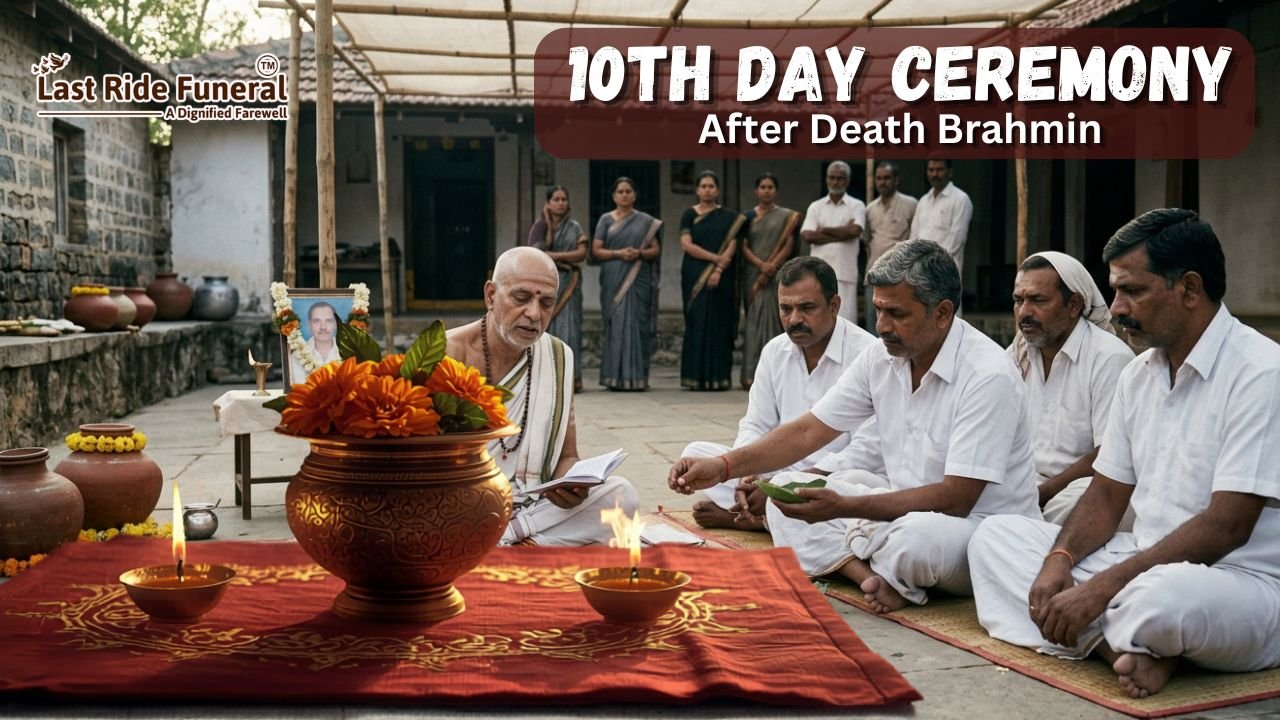
10th Day Ceremony After Death (Daswan) Brahmin Rituals
The departure of a loved one is a profound transition, not just for the grieving family but for the soul embarking on its journey beyond the physical realm. 10th Day Ceremony After Death Brahmin, In Hindu Brahmin traditions, the period following death is marked by sacred rites designed to provide sustenance to the soul and peace to the living.
At Last Ride Funeral, we believe that understanding these ancient customs brings a sense of solace and purpose to the mourning process. The 10th Day Ceremony, commonly known as Daswan, is a pivotal milestone in the 13-day Vedic mourning period.
The Significance of the 10th Day
According to Garuda Purana, after the physical body is cremated, the soul (Atma) assumes a subtle form known as the Preta. For nine days, the soul lingers near its earthly home. The 10th day signifies the completion of the Preta-deha (the subtle body), allowing the soul to move closer to the realm of the ancestors (Pitru-loka).
Essential Brahmin Rituals for Daswan
The 10th-day rituals are rigorous and traditionally performed by the eldest son or the Karta (chief mourner), guided by a learned Brahmin priest.
- The Shaving Rite (Mundan)
Male lineage members, particularly the Karta, undergo a ritual tonsure or shaving of the head. This act symbolizes the shedding of ego, the physical manifestation of grief, and a clean break from the impurity (Sutak) associated with death.
- Pinda Daan (Offering of Rice Balls)
This is the core of the ceremony. The Karta offers ten Pindas—balls made of cooked rice, black sesame seeds, honey, and ghee. Each Pinda represents a specific part of the soul’s new subtle body:
The first Pinda helps form the head.
The subsequent offerings help manifest the neck, heart, back, and limbs.
The 10th Pinda is believed to provide the soul with the energy to begin its journey.
- Tarpan (Libations of Water)
Water mixed with black sesame seeds is offered to the deceased while chanting sacred mantras. This ritual “quenches the thirst” of the soul and signifies the family’s devotion and remembrance.
- Purification of the Household
On the 10th day, the home undergoes a deep cleaning. In many Brahmin households, old earthen pots are replaced, and the clothes worn during the initial mourning period are washed or donated. This marks the beginning of the transition from “extreme mourning” to “purification.”
Ritual Requirements
To ensure the ceremony is performed with Vedic precision, several items are essential:
- Kusha Grass: Used to create a sacred ring (Pavitri) for the Karta.
- Black Sesame Seeds: Symbolizing immortality and protection.
- Ganga Jal: The holy water used for all cleansing rites.
- Barley Flour or Rice: The base for the Pindas.
The Role of Last Ride Funeral
Navigating the complexities of Brahmin rituals during a time of immense grief can be overwhelming. Last Ride Funeral acts as a bridge between tradition and the modern family. We assist in:
Connecting families with experienced Vedic Priests (Pandits).
Sourcing high-quality Samagri (ritual materials) required for Pinda Daan.
Coordinating the logistics at ghats or designated ritual spaces.
A Journey of Faith
The 10th-day ceremony is more than a tradition; it is a duty (Dharma). By meticulously following these Brahmin rituals, the family ensures that the departed soul does not wander in hunger or confusion but is instead fortified for the path ahead.
As the 10th day concludes, the family prepares for the Ekadasha (11th day) and the final Sapindikarana (13th day), where the soul finally joins the ancestors. At Last Ride Funeral, we stand by you through every step of this sacred journey, ensuring your loved one receives a farewell that is as dignified as it is divine.


Comments