What To Do in the First Hour After a Death in India?
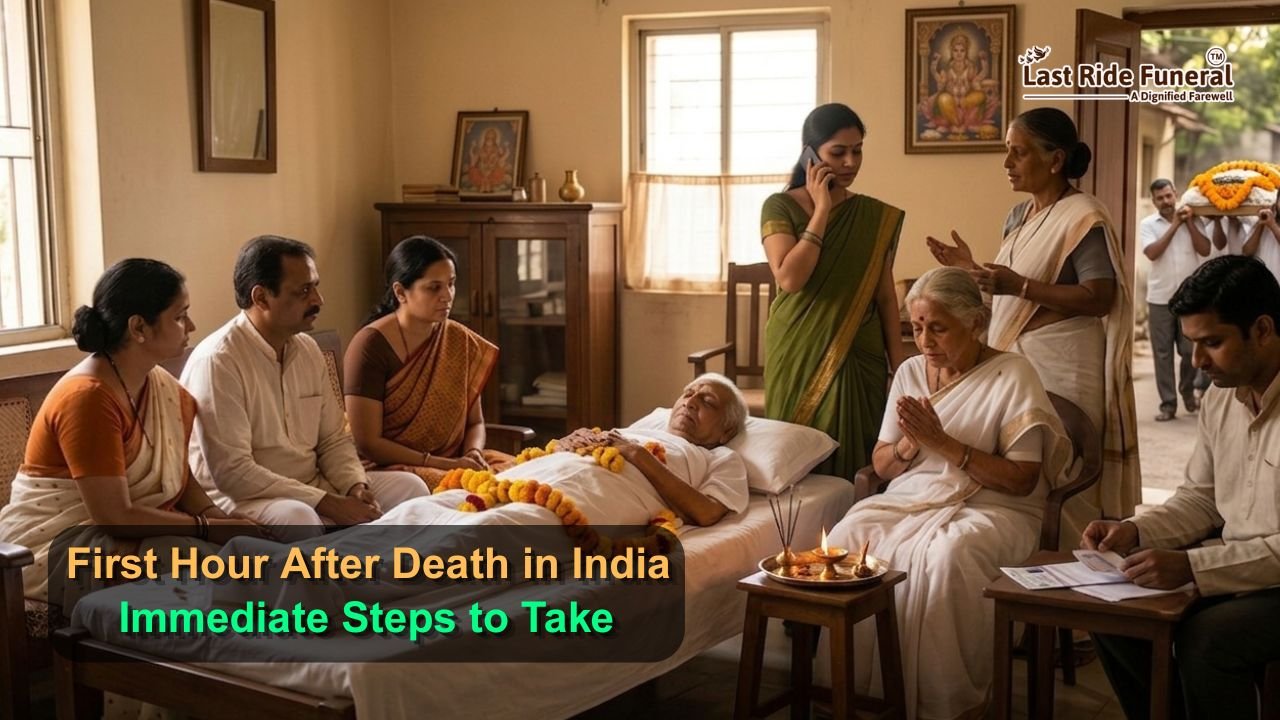
First Hour After Death in India can be overwhelming, emotional and confusing. At such a moment, it is hard to think clearly, yet with a few steps, you can manage the situation in a calm and dignified manner. This is a guide that takes you through the process that should be followed right after a person is dead, more so at home.
1. Confirm the Death Calmly
The initial step is to determine whether the individual is really dead or not. Assess such basic signs as breathing, pulse, and responsiveness. And in case of suspicion, call a physician or ambulance immediately. A family doctor can verify the death at home in most instances particularly in cases of an elderly or sick person. Do not panic–give yourself time to evaluate the situation.
2. Inform Close Family Members
After verifying the death, notify close relatives. Begin with the nearest like parents, siblings or children. Make your message simple and straightforward. This is a significant step to take, as decisions and responsibility are likely to be shared at such moments. Avoid calling many people simultaneously, and inform important people in advance.
3. Contact a Doctor for Death Certification
In India, a doctor has to confirm before any further formalities are carried out. In case of death that took place at home and the individual was under the care of a doctor, then he/she can be given a Medical Certificate of Cause of Death (MCCD) by his/her regular doctor. Should no physician be present, you might have to call a local hospital or licensed practitioner. The document is needed in legal and funeral procedures.
4. Prepare the Body with Respect
Once confirmed, lay the body in a good resting posture- most of the time lying straight on his back with his arms at his side. Close your eyes when open and have your body covered with a clean cloth. Lighting a diya or incense in the vicinity is a usual sign of respect taken in many Indian families. Maintain a quiet environment in the room and do not overcrowd.
5. Inform Extended Relatives and Close Contacts
Once the immediate family has been informed, you can begin notifying relatives, friends and close contacts. These days, this is done with phone calls or messaging apps. Post only the required information- when he/ she died and simple information. Do not have long discussions at this time.
6. Arrange for Funeral Services
It is best to begin thinking over Funeral Arrangements within the first hour. You do not have to make arrangements at once, though it would be easier to contact a local funeral service provider. They will be able to advise you on the transportation, documentation and rituals according to your community or religion.
7. Keep Important Documents Ready
Attempt to find some simple documents such as the ID (Aadhaar card, PAN card, etc.) of the deceased and any medical documents. These are likely to be required in the near future in the form of official paperwork. It is better to prepare them early so that it saves time in the future.
8. Take Care of Yourself and Others
Amidst all the tasks, do not neglect your emotional condition. Take a deep seat, drink some water, and have a few deep breaths. In case of old family members or children, ensure they are attended to. Support in emotion is as important as practical measures.
Conclusion
The hour right after a death is never pleasant, yet a simple approach can help to decrease chaos and tension. Emphasize on the confirmation of the death, close family notification, and medical certification, and upholding the dignity of the deceased. You need not do it all at once, you need to do it step by step. Even in the toughest times, small, little steps can be very clarifying.
Summary
The First Hour After Death in India is often filled with shock and confusion, making even simple decisions feel difficult. In such moments, it helps to focus on a few clear steps. Begin by confirming the death and informing your closest family members. Reach out to a doctor to get the required death certificate, as this is necessary for all further formalities. Gently place the body in a respectful manner, and then start informing close relatives and friends. It’s also a good idea to begin basic funeral arrangements early and keep important documents ready to avoid last-minute stress.
At the same time, don’t ignore your emotions. Take a moment to sit, breathe, and support others around you especially elderly family members or children who may be struggling to process the loss.
Having the right support during this time can make a big difference. Services like Last Ride Funeral are designed to guide families step by step through cremation and funeral procedures in India. Their role is not just about handling arrangements, but also about making the process smoother, more respectful, and less overwhelming. With the right guidance, families can focus on what truly matters saying a peaceful and dignified goodbye.