The Chautha & Tehravin Rituals: A Guide to Hindu Mourning
Loss is a difficult time. It is not just grieving as though a layer of black paint was added to the visual metaphor; for Hindus, in truth, mourning is about understanding and honouring the path taken by the soul and aiding it on its journey. There are lord of rituals related to mourning in Hinduism which provide comfort, help and meaning at the time. Two such rituals are the Chautha & Tehravin Rituals, Chautha (4th day) and Tehravin (13th day). In this piece we break down these rituals and their importance.
Hindu Rituals of Mourning
Hinduism views death not as the end‚ but as an important transition point when the soul (Atman) leaves the body․ Rites after death are intended to:
- Help the soul attain peace
- Support the family emotionally․
- Maintain spiritual balance
- Carry out customary Antyesti (last rites)
Belief and mourning practices differ from household to household within the Jewish community․ Mourning usually lasts 13 days and is associated with abstaining from luxuries‚ prayer and social interaction․
What is the Chautha Ceremony?
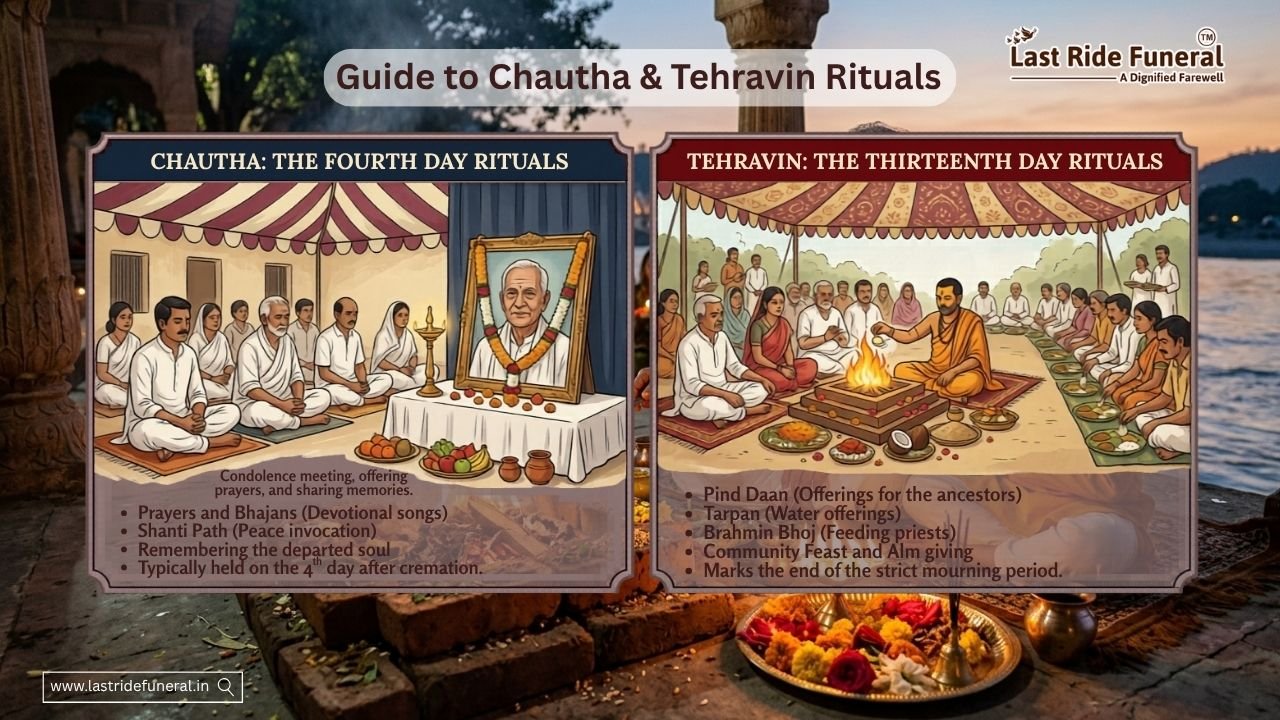
The *Chautha ceremony* is performed on the 4th day after the person’s death and is often the first important gathering after the funeral․
Purpose of Chautha
- To pray for the departed one’s peace
- To bring family and close friends together
- To begin emotional healing
What Happens at Chautha?
- The family may gather at home or in a community hall․
- Prayer meetings may be held‚ and religious texts may be recited․
- Bhajans (devotional songs) or silent prayers are offered․
- People offer condolences to the grieving family
Chautha is a simple ceremony‚ in which the family members go to share their loss and remember the departed person․
Significance of Tehravin (13th Day Ceremony)
The Tehravin marks the end of the mourning period and is considered one of the main Hindu funerals․
Why is Tehravin Important?
- It symbolizes the soul’s onward journey
- Represents the end of mourning rituals․
- It helps the family return to normal life
Key Tehravin Customs
1. Pind Daan or Offerings:
Done to appease ancestors and the soul of the person who has passed away to gain peace and salvation
2. Havan (Fire Ritual):
A priest performs havans with blessings using mantras.
3. Giving Food to Brahmins or Guests:
To give your guests alms. This is meant to purify the soul.
4. Charity and Donations:
Clothes, food or money.
The Emotional and Social Advantages of Rituals
It is entirely normal for sadness to be all-consuming, maybe only at first. The rituals of post-funeral in India are more than religious.
Emotional Support
- Family and friends to lessen loneliness
- Prayer could be comforting
- Ritual provides order
Cultural Connection
- Will pass on rituals through the generations
- Help remember the meaning of rituals
Closure
Accept the loss and come to terms with it is the ideal of Hindi 13th day ritual.
Some Basic Mourning Rituals
There are some practices for the 13 days of mourning:
- Wearing plain or white clothes
- Abstaining from festivities
- Eating vegetarian or simple food
- Either meditating or praying
These customs essentially convey regard and facilitate a society in which one may cry.
Modern View of Hindu Death Rituals
Today these rituals can be tailored to the living style and region. The spirit will remain but rituals can be done away with.
For example:
- Skype prayer meetings amongst us with our near ones who are far distant
- Short meetings due to time constraint
- Remembering gatherings, where you invite the whole world except the one being remembered
It’s all about the intent – to remember our beloveds lost along the way.
Conclusion
Chautha and Tehravin rituals are not just rituals, they are coping mechanisms and bonding, they aid healing. They assist families to deal with the bereavement and the soul of the deceased.
By understanding Hindu rituals of death, we can appreciate the spiritual meaning. The rituals are still performed – in their traditional ways or in modern forms – and still offer comfort in grief.
If you are looking for help and guidance in these times, then services like Last Ride Funeral are here to help you with these rituals.