Key Takeaways
- A body begins to change just hours in time, although decomposition can be postponed with suitable storage.
- A body can be stored in a morgue and can last 2-3 days or longer.
- Home arrangements can be handled using freezer boxes.
- Rapid response and planning are imperative.
- Logistical planning is not as crucial as emotional care.
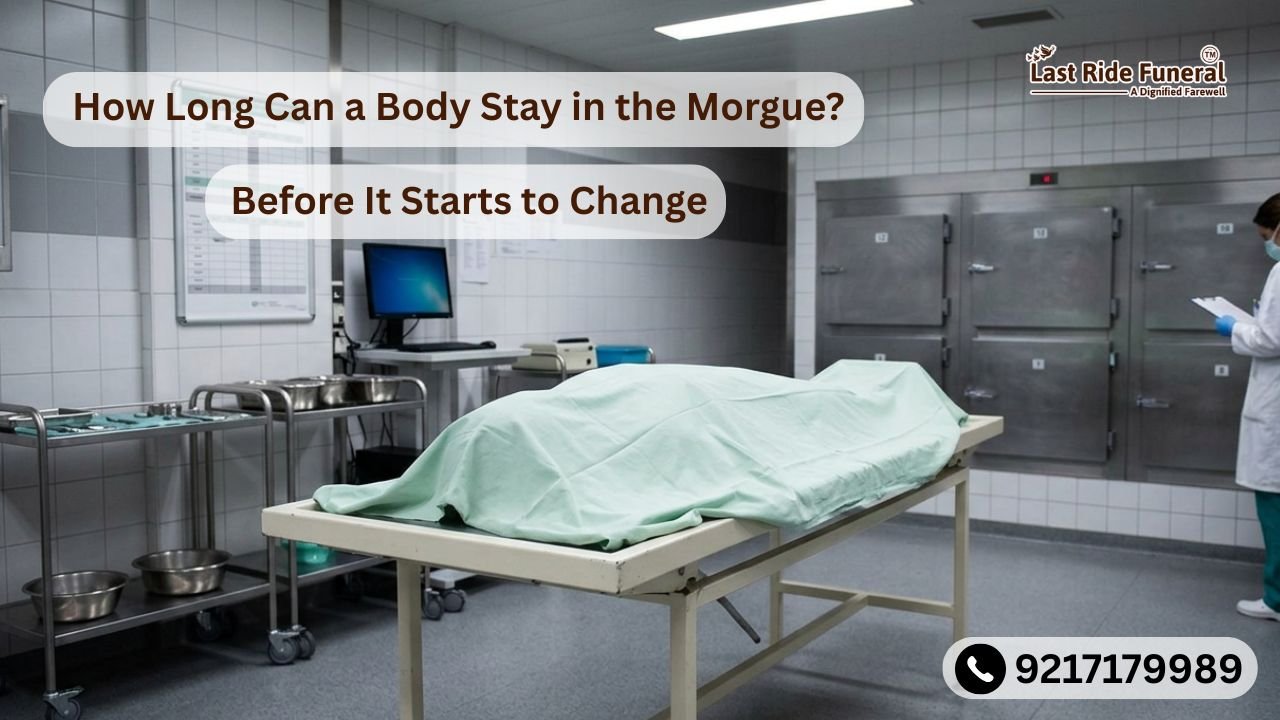
When a person dies, the family may require time to come to terms with the loss and notify family members and finalize the rites. In this time the body is typically stored in a morgue (commonly referred to as M Morgan) or in a Freezer Box. One of the most frequent and useful questions that people are inclined to pose is as follows: how long can a body be in a morgue before it starts to change?
This article describes how it works in a straightforward and simple manner, and with some practical insights to help you learn what actually goes on and how good management can save face and conservation.
Understanding What Happens After Death.
Naturally, the human body starts to alter after death. This is what is called decomposition and begins almost instantly. But the speed at which the changes manifest themselves is determined by a number of factors:
- Temperature
- Humidity
- Cause of death
- Environment (open air vs. controlled storage)
Under normal room conditions, observable alterations, such as discoloration, stiffness, and odor, may start between 6-24 hours. However, the timeline varies very much when there is appropriate preservation techniques.
The assistance of Morgues in Body Preservation.
A morgue is built to retard decay by ensuring that the body is kept in a cold and controlled environment. The temperature of most morgues is between 2 o C and 4 o C.
At this temperature:
- There is a reduction in bacterial activity.
- The breakdown of tissues is slowed down.
- Physical appearance is more constant.
But then, what is the maximum time a body can remain in a morgue?
- 24 -72 hours: The body is in a relatively stable state with a few apparent changes.
- 3-7 days: Minor alterations can occur, yet can still be viewed and rituals can be performed.
- After 1 week: Even in cold storage, gradual deterioration is observed.
In certain instances, bodies may be held longer, especially with sophisticated methods of preservation, but due to convenience and cultural considerations, the majority of families will carry out final rites in a few days.
What Happens When it is not Properly Preserved?
When a corpse is not put into a morgue or freezer box, the changes may occur much quicker:
- In several hours: Body cooling (algor mortis)
- 6-12 hours: Stiffness (rigor mortis) appears.
- 12-24 hours: Skin discolourations and premature decomposition.
- 24-hours onward: Visible and smell decomposition.
That is why arrangements are very crucial in time.
Use of Freezer Boxes in Homes.
In most cases and particularly in India, families would rather keep the body at home so that rituals can take place or the relatives can come. A freezer box will come in handy at this point.
By placing a freezer box as soon as possible as described in the emergency handling guide , this will help in giving the body the dignity it deserves and will allow families time to plan, rather than rushing into panic.
A freezer box normally:
- Keeps low temperature like a morgue.
- Slows decomposition effectively
- Enables safe storage up to 24-72 hours or longer, depending on circumstances.
This is particularly useful when:
- Family members are commuting to other cities.
- The plans of the funeral are postponed.
- It is hot or muggy.
Time Management in Such Situations in Practice.
It is not easy to cope with loss emotionally, but time management can help lessen stress and confusion. Some simple, practical steps are:
Always act Alertly, Yet Temperately.
The initial hours count. Legally confirm the death and start arrangements. The fast response will lead to more preservation.
Prioritize Tasks
Pay attention to key measures:
- Medical confirmation
- Informing close family
- Preparing a morgue or freezer box.
Do not waste time in making decisions.
Use Support Systems
Do not attempt to do it all by yourself. Share tasks with the family members:
- One individual is in charge of documents.
- Another contacts service operators.
- Others inform relatives
Avoid Procrastination
Procrastination in preparations may cause problems particularly during warmer weather. Even some hours can be the difference between body conditions.
Pre-planning Rituals.
Use the time you have available wisely to:
- Slot cremation or burial of books.
- Arrange transportation
- Prepare necessary documents
Striking a balance between Emotional and Practical Needs.
Logistics are crucial, but emotional well-being is equally crucial.
- Have short breaks when necessary.
- Stay hydrated
- Be there to one another as a family.
Grief may also influence decision making and therefore keeping it in order will assist in lightening the mind.
Real-Life Example
Consider a scenario where one dies during the evening, and the family is coming the following day, but it is in a different city.
Without preservation:
- It may also start to manifest itself in the body by morning.
and a freezer box or morgue:
- The duration of the stability of the body is 1-2 days.
- The relatives can have a peaceful meeting.
- Last rites may be carried out in a decent manner.
This is such a simple step that can make so much of a difference in keeping dignity.
Final Thought
To manage time after a loss is not a matter of hurry, but making wise decisions at the appropriate time. Family members are afforded time to mourn, collect, and bury with respect and dignity due to the proper preservation techniques such as morgues or freezer boxes.