Buddhist Funeral Customs & Death Rituals Guide Presented by Last Ride Funeral
In Buddhism, death is not the end, but a significant point of transition. It signifies the ending of a particular part of the wheel of Samasara (the cycle of rebirth) and the beginning of another. Here at Last Ride Funeral believe that the knowledge of these traditions assist grieving families to understand that their loved ones leave this world in peace and dignity, with mindfulness.
As Buddhism consists of a variety of different cultures in both Asia and the Western world, there is a complex diversity of practices in Theravada, Mahayana and Tibetan Buddhism. However, all share some common beliefs, such as the transience of life, the continuity of existence, and the significance of karma.
The Final Moments
Buddhist practices surrounding death begin well before the last breath. It is believed the state of mind at this point will greatly influence the quality of the next rebirth. Therefore, family and monks are primarily concerned with creating a calm, peaceful, and uplifting environment for the individual.
Sacred sutras may be chanted in unison as family members sit in a bedside position, or they may opt to place the Buddha in close proximity within the individual’s line of sight. The display of grief is generally discouraged in order to prevent the individual from feeling attached or confused.
Handling the Body and Customs After Death
There are diverse customs globally to govern what happens to the body after death. Undisturbed for some hours, for instance, is what some Orthodox Buddhists prefer. It is thought that this offers time for the consciousness to detach. It is subsequently washed and dressed in simple and dignified clothing and placed in a casket.
For a Buddhist visitation/wake, the following customs are observed:
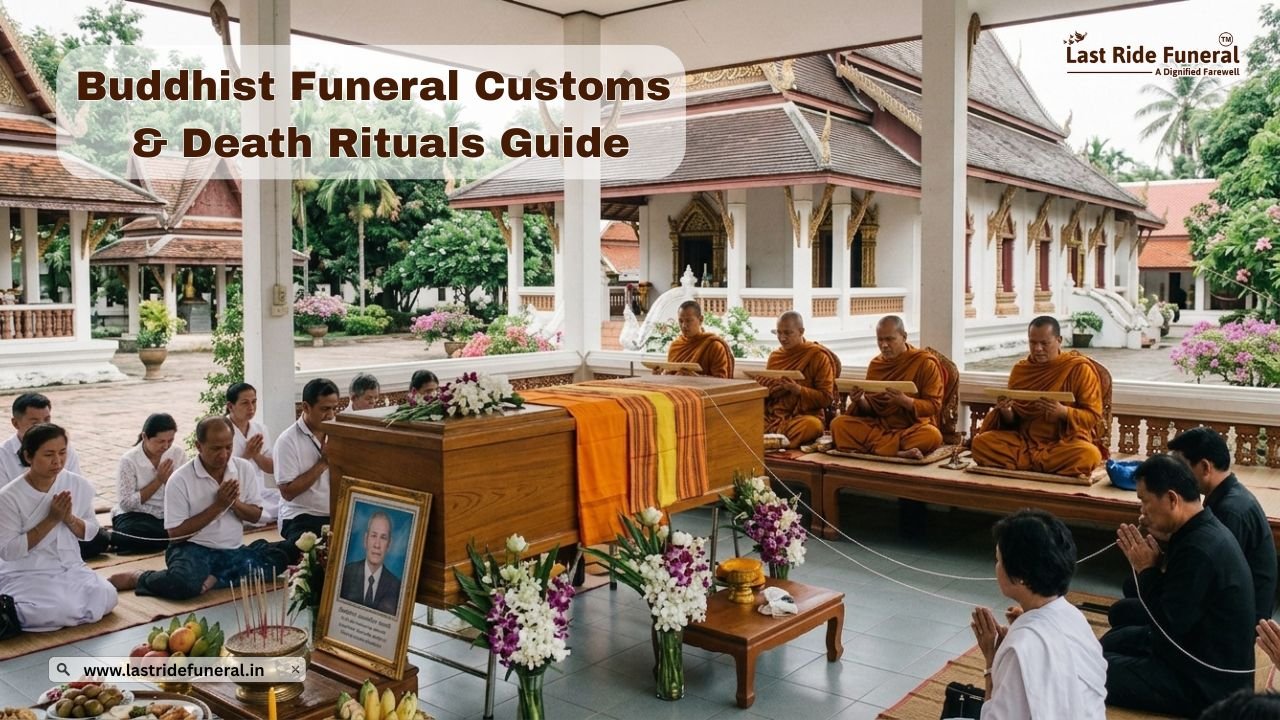
- Dress: Those in mourning wear white clothing, a custom that is highly appropriate in many Asian cultures and that represents mourning and spiritual purification, while dark or black clothing is becoming widely accepted Western customs. Bright color clothing, and especially red, which represents a celebratory custom, is prohibited.
- The Altar: In the front is a portrait of the deceased, which is accompanied by a picture or a statue of the Buddha. Decorated in fruit offerings, the altar is also decorated in incense and candles and fresh white chrysanthemums or lilies.
- Expressions of Sympathy: Guests enter and proceed to the altar before which they pause and bow, and may light incense, before they offer their sympathies to the family of the deceased.
Cremation vs. Burial
Cremation, while still a more popular choice, was also the method of disposition of the deceased Gautama Buddha and, therefore, a popular choice of disposition.
The Funeral Service
The simplicity and solemnity seen at a common Buddhist Funeral Service is not without reason. It is customary for monks to preside over and conduct the service, leading the attendees in prayer and chanting particular funeral suttas. These chants are intended to produce spiritually meritorious acts that will transfer to the deceased and assist them through the intermediate Bardo state in their time before favorable rebirth.
Packaged, lengthy, and elaborate eulogies are uncommon. Attendees instead contemplate existence and its transience, inevitability and impermanence, and mindfulness and ethics.
The Mourning Period and Continued Remembrance
The funeral is not the endpoint of the transition. In Buddhist culture, the primary mourning period is 49 days. The deceased’s spirit is said to travel to a new dimension in that time. Important memorial services are conducted on the 3rd, 7th, and 49th days of the deceased.
In this period, the family donates to charity, affords sustenance and other necessities to the monks and meditate, dedicating all spiritual merit to the deceased.