The Splitting of the Skull (Kapala Kriya): Vedic Meaning and Cremation Rituals
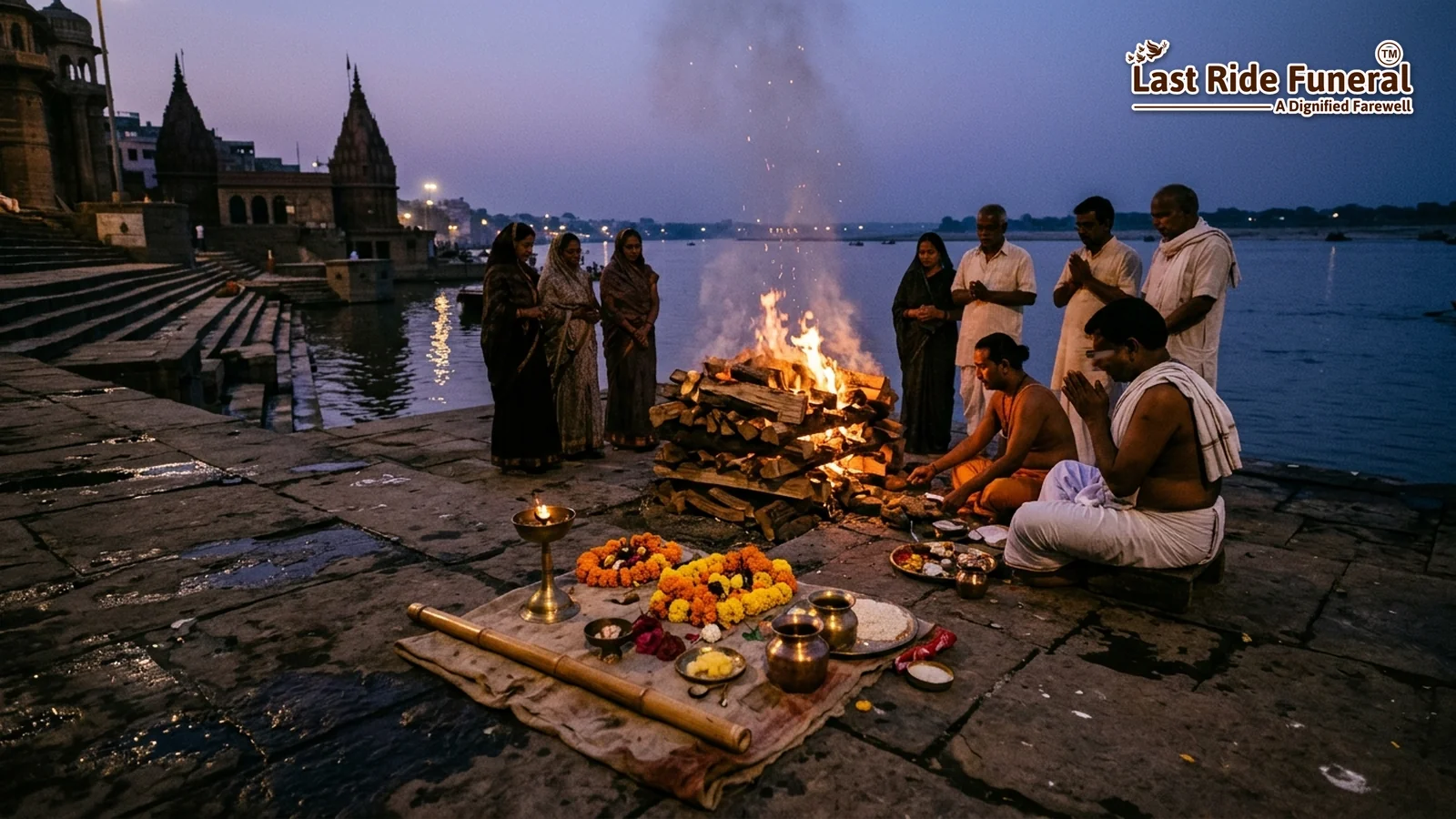
During the height of a traditional Hindu wooden cremation, as the sacred fire consumes the physical vessel, a poignant and solemn rite takes place that often perplexes onlookers: Kapala Kriya, the ceremonial splitting of the skull. To the uninitiated, this moment can feel startling, yet in Vedic philosophy and the Garuda Purana, it represents one of the most compassionate and spiritually vital acts a chief mourner performs for the departing soul (jiva).
At Last Ride Funeral, our Vedic pandits and senior coordinators frequently guide grieving families through this profound juncture across Delhi NCR cremation grounds—from Nigambodh Ghat and Lodhi Road Cremation Ground to Dwarka Sector 24. Understanding the spiritual rationale behind Kapala Kriya dispels fear, replacing anxiety with deep reverence for timeless Vedic wisdom.
What Is Kapala Kriya?
The term Kapala translates to the skull or cranium in Sanskrit, while Kriya denotes a consecrated ceremonial action.
During an open-air wood pyre cremation, once the pyre reaches peak thermal intensity and the body is largely consumed, the chief mourner (Karta, typically the eldest son) approaches the pyre holding a long bamboo staff (danda). Accompanied by the presiding Vedic priest reciting specific mantras from the Rigveda and Garuda Purana, the Karta gently strikes the crown of the cranium three times until the cranial bone fractures. Ghee, camphor, and fragrant samagri are immediately offered into the aperture to honor the final liberation.
The Spiritual Mechanics: Opening the Brahmarandhra
In Yogic and Vedic anatomy, the human body contains nine physical openings (nava dwara): the two eyes, two nostrils, two ears, mouth, anus, and genital passage. However, there exists a tenth, metaphysical gateway located precisely at the sagittal suture at the crown of the head—the Brahmarandhra (literally, “the portal of Brahma”) or the Sahasrara Chakra.
- The Exit Gate of Liberation: Vedic tradition teaches that the aperture through which the life breath (prana) departs determines the soul’s subsequent journey. Departures through lower orifices bind the soul to sensory or earthly planes. Conversely, departure through the crown aperture directs the soul toward higher consciousness (Devayana or celestial pathways).
- Severing Physical Attachment: In earthly life, the mind and ego (Ahamkara) reside intensely within cranial neural pathways. Even after clinical death, the subtle energetic body (Sukshma Sharira) may hover around the familiar physical shell. The fracture of the cranium definitively breaks this remaining magnetic attachment, releasing the soul into its onward karmic transition.
- The Final Agnihotra: Hindu cremation is fundamentally not disposal; it is an Antyesti—the final sacrifice of one’s own physical body back into the cosmic fire (Agni). The skull acts as the final vessel holding the essence of consciousness. Breaking it constitutes the concluding oblation of this ultimate hawan.
The Practical and Physiological Rationale
Beyond its esoteric metaphysics, Kapala Kriya possesses an ancient, practical foundation developed by Vedic seers:
- Thermal Expansion and Pressure Release: Due to the dense, enclosed architecture of the human skull, intense pyre heat can cause intracranial gases and fluids to build severe pressure. In ancient outdoor open pyres, if not systematically cracked, the skull could burst violently, disrupting the dignity of the pyre and startling the gathering. Controlled cranial cracking ensures smooth, reverent combustion.
- Complete Elemental Reduction: The cranial dome is the thickest bone structure in the human body. By cracking the skull and offering pure desi cow ghee and dry sandalwood directly inside, the priest ensures complete and uniform reduction of bone matter to sacred ash.
Kapala Kriya in Modern Electric and CNG Crematoria
With the widespread adoption of eco-friendly crematoria—such as the electric furnaces at Dwarka Sector 24 or the modern CNG chambers at Green Park Shamshan Ghat—families frequently ask: How is Kapala Kriya observed in mechanized systems?
Because families cannot physically approach the motorized chamber once sealed, Vedic priests conduct a symbolic Kapala Kriya prior to chamber entry:
- The Coconut Consecration: A sacred water-filled green coconut (shrifal) is sanctified with mantras, placed near the crown of the deceased, and ceremonially cracked by the chief mourner before the tray enters the furnace.
- Ghee Offering on the Cranium: Pure ghee and black sesame seeds (til) are poured over the forehead and crown area during the Mukhagni prayers on the reception deck.
- Internal Incineration: Modern high-temperature CNG and electric chambers operate between 850°C and 1,000°C, naturally achieving full cranial reduction without physical staff contact.
Guidance for Families at the Cremation Ground
Witnessing Kapala Kriya can be emotionally challenging for grieving relatives. Senior coordinators like Joginder at Last Ride Funeral ensure that the ritual is conducted with profound sensitivity:
- Quiet Preparation: The priest gently guides the Karta forward, explaining each step so there is no hesitation or sudden shock.
- Respectful Boundaries: Distant relatives and sensitive family members are encouraged to step back slightly during this specific phase, allowing the Karta and close kin to focus on the Vedic mantras.
- Immediate Wash and Purifying Water: Following the pyre rites, the Karta and family wash their hands and face with consecrated water before leaving the cremation grounds without turning backward.
24/7 Funeral Support & Assistance
For immediate, respectful funeral assistance, hearse van transport, Vedic pandit services, or crematorium coordination across Delhi NCR, contact Last Ride Funeral:
- 24/7 Helpline: +91 92171 79989
- Official Website: https://lastridefuneral.in
Frequently Asked Questions
Why does only the chief mourner perform Kapala Kriya?
In Hindu Antyesti, the chief mourner (the Karta, usually the eldest son) acts as the earthly proxy responsible for fulfilling the deceased’s final karmic obligations. By administering Kapala Kriya, the son repays the sacred filial debt (Pitri Rina) and assists the parent’s soul in entering the spiritual realm.
What mantras are recited during Kapala Kriya?
Vedic priests chant verses in invocation of Lord Agni, seeking safe passage for the jiva through the cosmic sun rays (Surya Mandalam) and praying for the opening of the Brahmarandhra so that all earthly sins dissolve in the sacred fire.
Is Kapala Kriya performed for children or ascetics?
No. Children under the age of puberty and enlightened ascetics (sanyasis) are traditionally not cremated, nor is Kapala Kriya performed for them. Because their souls possess no worldly attachment, they are accorded burial or Samadhi.
Can Kapala Kriya be skipped if the family feels uncomfortable?
If a family finds the physical rite too distressing, the Vedic pandit can transition the ritual to a symbolic offering of ghee, camphor, and coconut mantras at the head of the pyre. Vedic scripture places heartfelt intention (bhavana) and family composure above physical rigidity.
At what exact stage of cremation is Kapala Kriya conducted?
It is performed when the funeral pyre reaches peak intensity, usually 1 to 1.5 hours after Mukhagni, once the skull bone is sufficiently heated for ghee to be absorbed and the cranium to be gently opened.
What kind of bamboo staff or stick is used for Kapala Kriya?
A dried, unbroken green or seasoned bamboo pole (bans ki lathi) measuring approximately 6 to 8 feet is used, allowing the Karta to maintain a safe distance from the intense heat of the pyre while fulfilling the ritual.
How is Kapala Kriya adapted for CNG or electric crematoriums?
In enclosed electric or CNG crematorium chambers, physical contact with the body during burning is impossible. Vedic priests perform a symbolic Kapala Kriya by consecrating an unbroken coconut (Sriphal) and placing it near the deceased’s head along with ghee and sesame seeds prior to furnace loading.
What happens to the ashes and remaining skull fragments after cremation?
After the cremation concludes and the pyre cools naturally overnight, the family collects the sacred calcined bone fragments (Asthi Sanchayana) the following morning, placing them into an earthen urn for subsequent immersion (Asthi Visarjan) in holy rivers such as the Ganga or Yamuna.
Comments