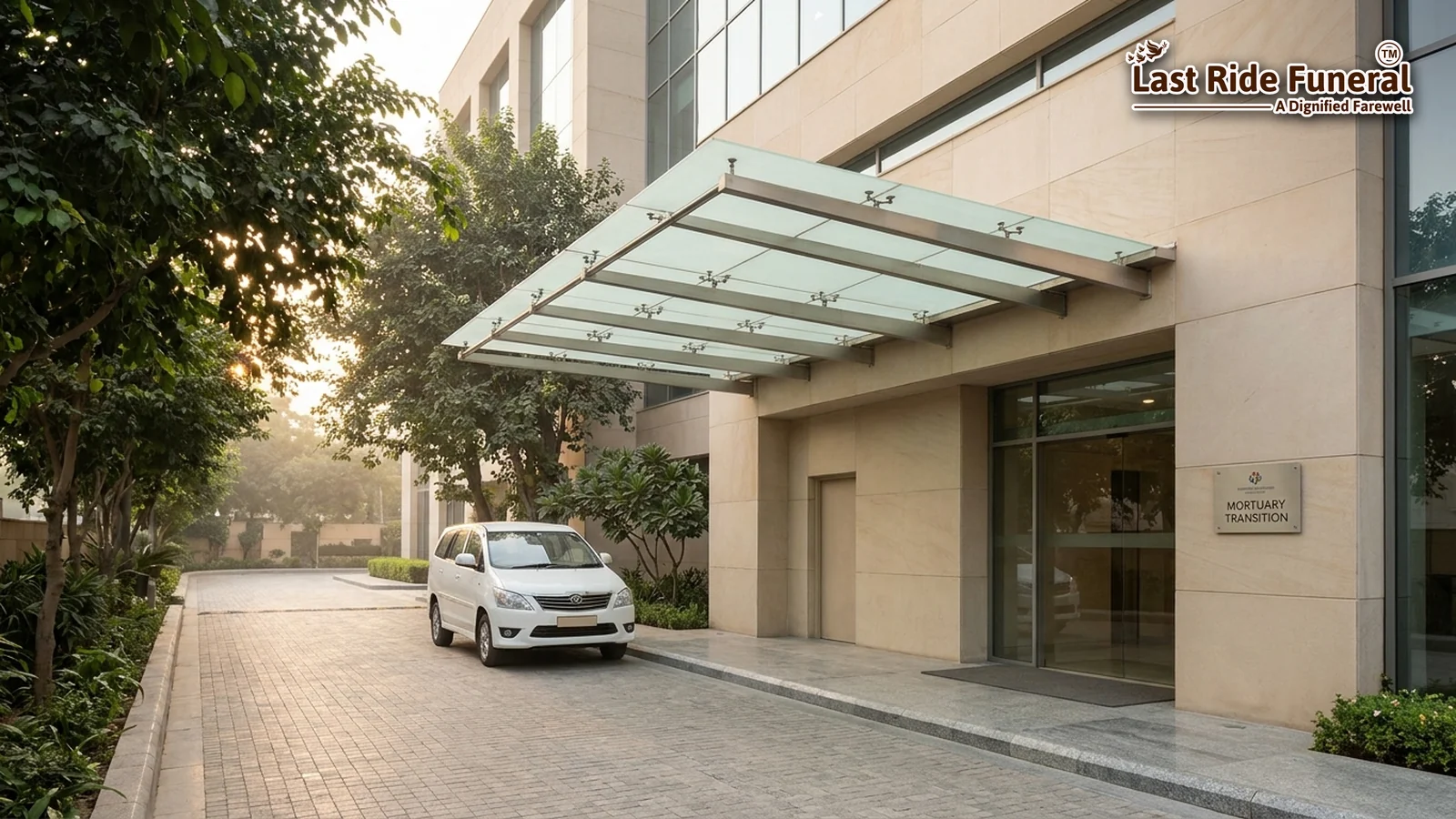
What Happens After a Death in a Delhi Hospital? A Family’s Step-by-Step Guide
If you are standing in a hospital corridor in Delhi right now, having just received the heartbreaking news of a family member’s passing from the intensive care team or ward physician, the next few hours can feel like a blur of medical terminology, billing counters, and bureaucratic procedures.
Whether your loved one passed away in a premier government institute like AIIMS or Safdarjung, or a private tertiary hospital such as Max, Fortis, or Apollo, every hospital in the National Capital Territory follows a strict, legally mandated protocol for declaring death, issuing statutory paperwork, moving the body to the hospital mortuary, and handing over custody to the family.
At Last Ride Funeral, our dedicated Delhi mortuary coordinators handle these hospital releases day and night. Under the operational leadership of Joginder, Senior Funeral Coordinator for Delhi, we step into hospital administrative wings to guide families through billing clearances, doctor certifications, and hearse dispatches so you can focus on being with your family.
Below is our ground-tested, step-by-step roadmap detailing exactly what happens in the first hour, the documents required, how mortuary transfers work, and how to safely navigate the release process.
1. The First 60 Minutes Checklist: Immediate Action Plan
When a patient stops breathing and cardiac activity ceases, doctors perform mandatory clinical tests (pupillary reflex, absence of pulse, electrocardiogram flatline) before formally communicating the loss.
Here is what you must do immediately in the first hour:
  ┌────────────────────────────────────────────────────────────────────────┐
  │                 First 60 Minutes Hospital Checklist                    │
  ├────────────────────────────────────────────────────────────────────────┤
  │ [x] 1. Obtain Official Time of Death & Confirm Non-MLC Status          │
  │ [x] 2. Secure All Personal Belongings & Valuables from the Ward Nurse  │
  │ [x] 3. Request Form 4 (Institutional Medical Certificate of Death)     │
  │ [x] 4. Clear Hospital Pharmacy & Inpatient Billing Counters            │
  │ [x] 5. Receive Mortuary Tag Token & Confirm Refrigerated Bay Storage   │
  │ [x] 6. Coordinate Sanitized Hearse Van Dispatch for Gate Pickup        │
  └────────────────────────────────────────────────────────────────────────┘
| Time Window | Ward / Department | Key Action Required | Crucial Document / Item |
|---|---|---|---|
| 0 – 15 Mins | ICU / Inpatient Room | Doctor confirms death; nursing staff closes lines, disconnects monitors. | Attending Doctor’s Death Note in Bedhead File |
| 15 – 30 Mins | Ward Station | Relatives identify the body; nursing staff prepares mortuary tag and wraps shroud. | Hospital ID Band Verified on Deceased Wrist |
| 30 – 60 Mins | Billing & Administration | Final pharmacy reconciliations, discharge summary preparation, account clearance. | “No Dues / Discharge Slip” from Billing Counter |
| 60 – 90 Mins | Hospital Mortuary | Body transferred via service elevator to cold storage bay; relative signs ledger. | Mortuary Custody Token & Release Gate Pass |
| 90 – 120 Mins | Hospital Exit Gate | Hearse arrives; identity re-checked against Form 4; body handed to family. | Form 4 Original + Gate Pass + Hearse Dispatch |
2. Declaring Clinical Death & The Treating Consultant’s Handover
Under Indian medical jurisprudence and the Registration of Births and Deaths Act, 1969, only a registered medical practitioner (holding a valid DMC or NMC registration) can officially pronounce death.
- The Pronouncement: The duty doctor or attending consultant signs the bedhead ticket recording the exact time of death and biological cause.
- Body Preparation on the Bed: The nursing staff removes intravenous catheters, endotracheal tubes, and monitoring electrodes. In accordance with clinical dignity, the eyelids are closed, jaw aligned, and a clean hospital sheet or shroud is placed over the body.
- Personal Valuables Handover: The head nurse collects all personal belongings—including watches, rings, sacred threads (Janeu), gold ornaments, and spectacles. The next of kin must inspect this inventory and sign the personal belongings register before leaving the ward.
3. Form 4 vs. Form 4A & The Billing Clearance Protocol
One of the most frequent sources of confusion for families is the paperwork required to release the body from the hospital and subsequently book a cremation ground.
                   ┌──────────────────────────────────────────────┐
                   │    Hospital Death Documentation Pathways     │
                   └──────────────────────┬───────────────────────┘
                                          │
            ┌─────────────────────────────┴─────────────────────────────┐
            ▼                                                           ▼
   【 Natural / Clinical Deaths 】                             【 Medico-Legal Cases (MLC) 】
    • Admitted for illness / old age                           • Road accidents / falls / trauma
    • Treating doctor issues Form 4                            • Poisoning / burn injuries / suicide
    • Direct billing clearance                                 • Death within 24 hrs of admission
    • No police intervention needed                            • Mandatory Police Inquest (Sec 174)
    • Direct release to private hearse                         • Post-Mortem required at Govt Mortuary
What is Form 4?
For deaths occurring within a hospital, the institution must legally issue Form 4: Institutional Medical Certificate of Cause of Death. This form contains:
* Full name, age, gender, and residential address of the deceased.
* Immediate cause of death (e.g., septic shock, acute myocardial infarction).
* Underlying cause of death (e.g., chronic kidney disease, coronary artery disease).
* Doctor’s full name, signature, and state medical registration number.
Operational Warning: Never leave the hospital without the original stamped Form 4. Cremation grounds in Delhi—including Nigambodh Ghat and Lodhi Road—will not allot an electric, CNG, or wood platform without it.
Clearing the Billing Counter
Before the hospital mortuary attendant will release the body, the family must complete financial settlements:
1. Pharmacy Returns: Unopened, sealed medications from the ICU must be returned to the in-house pharmacy for credit.
2. TPA & Insurance Approvals: If cashless health insurance was active, the hospital TPA desk sends a final intimation to the insurance provider. If final settlement takes several hours, most private hospitals permit families to deposit a refundable security or pay the estimated balance to obtain an immediate provisional clearance slip (No Dues Slip).
3. Gate Pass Generation: Once accounts are stamped “Cleared,” the administrative desk issues the official Mortuary Gate Pass.
4. Hospital Mortuary Storage & Cold Chamber Procedures
In Delhi, families often need hours to gather relatives, await flights from abroad, or coordinate cremation timings. During this interval, the body cannot remain in the ward or room.
┌───────────────────────────────────┬────────────────────────────────────────────────────────┐
│ Mortuary Stage                    │ Operational Details & Temperature Control              │
├───────────────────────────────────┼────────────────────────────────────────────────────────┤
│ **Temporary Holding (Ward)**      │ Maximum 1 to 2 hours post-declaration at room temp.     │
│ **Hospital Mortuary Cold Bay**    │ 2°C to 4°C refrigerated stainless steel chambers.     │
│ **Identification Wrist Tag**      │ Moisture-resistant barcode tag listing Patient ID & Age│
│ **Standard Storage Charges**      │ Free for first 6–12 hrs; ₹1,000–₹3,000/day thereafter. │
│ **Extended Home Preservation**    │ Mobile Mortuary Freezer Box arranged by funeral service│
└───────────────────────────────────┴────────────────────────────────────────────────────────┘
When Relatives Are Arriving Late
If close family members are flying in from other cities or countries, keeping the body in the hospital mortuary overnight is the safest clinical option. However, if the family wishes to bring their elder home for final darshan and prayers before cremation, Last Ride Funeral provides specialized dead body freezer box services delivered directly to your home with digital temperature controls (maintaining -2°C to 4°C).
5. Medico-Legal Cases (MLC) vs. Natural Hospital Deaths
A critical junction in hospital death administration is whether the treating physician marks the case as a Medico-Legal Case (MLC).
What Triggers an MLC in Delhi Hospitals?
Doctors are legally bound to notify the Delhi Police post on duty at the hospital if the death involves:
* Road traffic accidents (RTA) or external trauma.
* Death occurring within 24 hours of hospital admission with no clear prior medical history.
* Suspected poisoning, overdose, or chemical ingestion.
* Suicide or unexplained falls.
* Burn injuries or post-surgical complications under police investigation.
* Female deaths occurring within 7 years of marriage.
The MLC Clearance Sequence
If marked as MLC, the hospital cannot release the body directly to the family:
1. The hospital security post alerts the local jurisdictional police station.
2. An investigating officer (IO) arrives, inspects the body, and completes the Inquest Papers (Panchnama).
3. The body is transferred in a government mortuary van to an authorized forensic facility (such as AIIMS Mortuary, Safdarjung Forensic Block, or Maulana Azad Medical College) for an autopsy.
4. Only after the post-mortem is concluded and the investigating officer issues an official Police No-Objection Certificate (NOC) can the family claim the body and proceed with cremation.
For a comprehensive breakdown of immediate steps during emotional bereavement, read our companion analysis on what happens the first 30 minutes after death.
6. Mortuary Gate Release & Dignified Hearse Loading
Once billing and medical clearances are stamped, the final physical transfer takes place at the hospital’s dedicated mortuary departure bay:
Step 1: Family Arrival at Mortuary
Chief mourner presents the "No Dues / Discharge Slip" to the mortuary supervisor.
       │
       ▼
Step 2: Physical Identification Verification
Mortuary staff unzips the preservation cover; family confirms identity.
       │
       ▼
Step 3: Signature in Hospital Custody Ledger
Relative signs acknowledging receipt of the body and Form 4 documents.
       │
       ▼
Step 4: Hearse Van Alignment
Air-conditioned Shav Vahan docks at the bay; stretcher trolley rolled to vehicle.
       │
       ▼
Step 5: Respectful Loading & Security Gate Check
Hospital security inspects the gate pass; hearse departs for home or cremation ground.
Our senior coordinator Joginder ensures that during this transition, the body is treated with supreme reverence. Our hearse team assists with lifting, provides fresh white coverings, and ensures the vehicle is maintained at an optimal cooling temperature throughout the journey across Delhi.
7. Real Case Study: Clearing a Sudden Hospital ICU Release in South Delhi
In late October 2026, an 74-year-old retired defense officer passed away due to cardiac failure in the multi-specialty ICU of a private hospital in Saket, South Delhi, at 11:45 PM.
The family had only a daughter and elderly mother present at the hospital. Distraught and overwhelmed, they faced hospital administrative delays: the pharmacy had uncredited medication worth ₹40,000, and the night billing staff indicated that discharge paperwork would take until 08:00 AM the next morning.
How Last Ride Funeral Handled the Emergency:
1. 12:15 AM: Our 24/7 helpline was contacted. Coordinator Joginder reached the hospital within 25 minutes.
2. 01:00 AM: Joginder coordinated with the night administrative supervisor, facilitated the pharmacy return reconciliation, and assisted the daughter in signing the provisional billing bond so the body could be moved safely into the hospital mortuary cold room rather than remaining stranded in the ICU corridor.
3. 07:30 AM: By morning, our liaison officer had the original Form 4 signed and stamped by the attending cardiologist.
4. 08:45 AM: A pristine, air-conditioned dead body hearse van docked at the Saket mortuary bay. The body was respectfully transported to Lodhi Road Cremation Ground, where a pre-booked CNG slot allowed the family to complete the last rites with dignity by 11:30 AM.
More From Last Ride Funeral
8. Frequently Asked Questions (FAQs)
How long does a Delhi hospital take to release a dead body?
For a natural death without police involvement, the release process in a Delhi hospital typically takes between 1.5 to 3 hours. This duration includes preparing the body, completing clinical death summaries, finalizing pharmacy account credits, settling billing dues, issuing Form 4, and transferring custody at the hospital mortuary bay.
Can a hospital withhold a dead body due to unpaid medical bills in Delhi?
No. The High Court of Delhi and the Supreme Court of India have strictly ruled that hospitals cannot hold or detain a deceased patient’s body over pending medical bills. The right to a dignified funeral is protected under Article 21 of the Indian Constitution. Hospitals must release the body while working out financial settlement or legal recovery agreements separately.
What is Form 4 and why is it mandatory for hospital deaths?
Form 4 is the statutory Institutional Medical Certificate of Cause of Death prescribed under the Registration of Births and Deaths Act, 1969. It establishes the clinical cause of death and confirms that the demise occurred under medical supervision. Municipal cremation grounds in Delhi strictly require original stamped Form 4 copies before allotting an electric, CNG, or wood pyre slot.
What happens if a patient dies in a hospital at night in Delhi?
If death occurs at night, the body is moved to the hospital’s refrigerated mortuary cold bay (2°C to 4°C) after initial doctor certification. Full billing clearance and Form 4 issuance can either be completed with the night administrative supervisor or finalized early the following morning. The family can arrange a hearse van for early morning cremation ground transport.
What is the difference between a natural death and an MLC death in a hospital?
A natural death occurs due to diagnosed illness, disease progression, or natural aging while under active medical care; the hospital releases the body directly to the family with Form 4. A Medico-Legal Case (MLC) involves trauma, accidents, poisoning, suspicious circumstances, or death within 24 hours of admission; the body cannot be released without mandatory Delhi Police inquest (Panchnama) and government mortuary autopsy.
How can a family transport a deceased person from the hospital to their home?
Under municipal public health rules, a deceased person must be transported in a specialized, air-conditioned dead body hearse van (Shav Vahan) rather than a passenger car or standard patient ambulance. Last Ride Funeral provides sanitized, GPS-tracked hearse vans equipped with roll-in mortuary stretchers and air conditioning across all Delhi hospitals 24/7.
What documents should the family carry to the hospital mortuary counter?
The family must bring: (1) The hospital Billing Clearance / No Dues Slip, (2) Original Aadhaar Card or Voter ID of the deceased (+ 3 photocopies), (3) Government photo ID of the next of kin claiming the body, and (4) The hospital-issued death intimation slip or mortuary custody token.
How does Last Ride Funeral assist with hospital releases in Delhi?
Last Ride Funeral provides 24/7 on-ground hospital assistance across AIIMS, Safdarjung, Max, Fortis, Apollo, and all major Delhi NCR healthcare centres. Our coordinators resolve billing bottlenecks, secure Form 4 certificates, arrange immediate hearse dispatch, coordinate cold storage, and manage cremation ground bookings. Call our 24/7 helpline at 9217179989 for rapid support.
9. Conclusion: Stepping Forward with Professional Support
Losing a loved one in a hospital environment brings intense grief coupled with urgent logistical obligations. Knowing that clinical declarations, Form 4 certifications, and mortuary handovers follow an established municipal sequence provides reassurance that each step can be handled calmly and respectfully.
If your family is currently dealing with a hospital death anywhere in Delhi NCR and requires immediate on-site coordination, documentation help, or dignified hearse transport, our senior coordinators are ready to support you.
- 24/7 Emergency Hospital Liaison: 9217179989
- Official Website: lastridefuneral.in
- Immediate Deployment: On-site coordinator arrival within 25–35 minutes across all Delhi hospital mortuaries.



Comments