Who Can Perform Last Rites? Traditions & Rules Explained
It’s okay to talk about death, and it’s never easy to say goodbye when it’s a loved one. One of the most crucial questions arising with the death of a family member is who is Allowed to Give the Last Rites? This topic is important for all old or young, men or women, regardless of background because everyone will come to this point at some point in their lives.
Understanding Last Rites in Simple Terms
Last rites are the last rites given when a person dies. These Allowed to Give the Last Rites to be at peace and provide a suitable manner for the family to bid farewell. Each has their customs and traditions, but the fundamental purpose is to remember the loved ones with affection and reverence.
Traditional Rules Across Different Faiths
Hindu Traditions
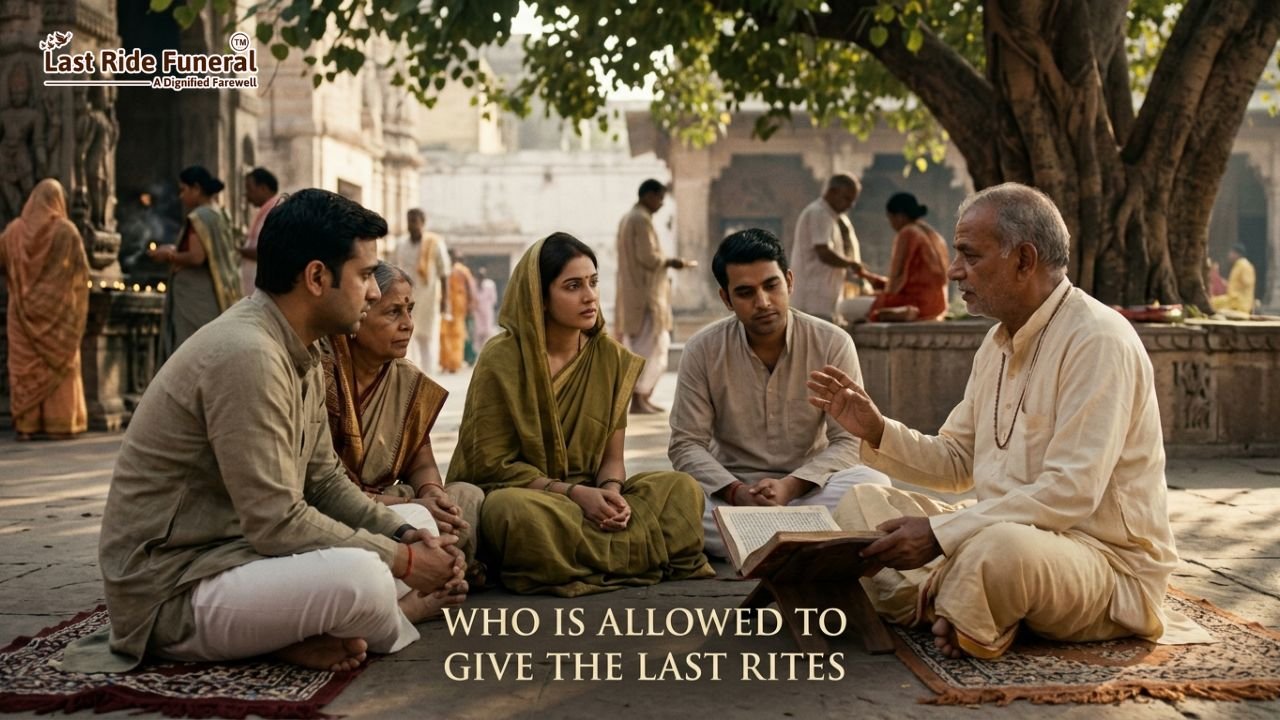
In Hindu families the eldest son is supposed to carry out the last rites. This involves kindling the funeral fire and carrying out all the proper rituals. Other family members such as a brother, nephew or grandson may fill in if there is no son. It is thought that these rites assist the soul to travel peacefully.
But, the times are changing. These religious tasks are now performed by many families’ daughters and wives. This change has begun to be embraced by several Hindu priests in India who understand that love and devotion is more important even than gender.
Muslim Traditions
The funeral of a person is dealt with by members of the family in Islam. Generally, males have their bodies washed and wrapped with shrouds, and females prepare female bodies. Prayers are held together as a community and any adult Muslim may lead the prayer of the funeral.
Christian Traditions
Typically, the Christian Last Rites involve a priest or pastor that will perform the final blessings and prayers. Family members are involved in the service through their presence and support.
Sikh Traditions
In Sikh families, anybody, man or woman can do the last rites for any member of the family. It is about reciting prayers and being dignified throughout the process.
Modern Changes in Last Rites Practices
The society is changing and so are our traditions. Often, these days families choose what to do without any hard-and-fast guidelines. Daughters are taking on the role of administering final rites to their parents and this is being embraced in all communities.
This has also been endorsed by courts in India. Judicial decisions have established daughter’s right to conduct Funeral Services for her parents. This is a positive move towards equality and respect amongst the members of the family.
Practical Tips for Families
People’s emotions are running high when someone dies. The following are some simple strategies to deal with this challenging time:
- Make it a priority to do things in order: let the family know what is urgent, arrange the ceremony and support each other in emotional ways.
- Do not delay funeral services: Funeral services can not be postponed. Make any relevant calls and decisions promptly and in a kind self-caring way.
- Seek Professional Help: Funeral service professionals can direct you through the process, and take care of the arrangements, so you can grieve and heal.
- Eat, Sleep and Take your breaks: Even in the hard times, remember to take breaks, eat and sleep. You can’t help others if you’re totally tired.
- It is important to respect everyone’s feelings : Each family member may have different opinions. Take time to hear each other and reach mutual understandings.
The significance of balance
Mourning is a process and going through it too quickly doesn’t help anyone. Give yourself and your family time to grieve, to reflect on joyous experiences and to come to a positive place.
Conclusion
The issue of who can give the last rites is rooted in the person and depends on the culture. It is the love, respect and intention behind the ceremony that is important. If it is a son, daughter, spouse or someone else, anyone who cares deeply about the person who has died deserves the final goodbye.