Why Do Bodies Sometimes Not Burn Completely in Varanasi? Ghat Realities, Science & Vedic Tradition
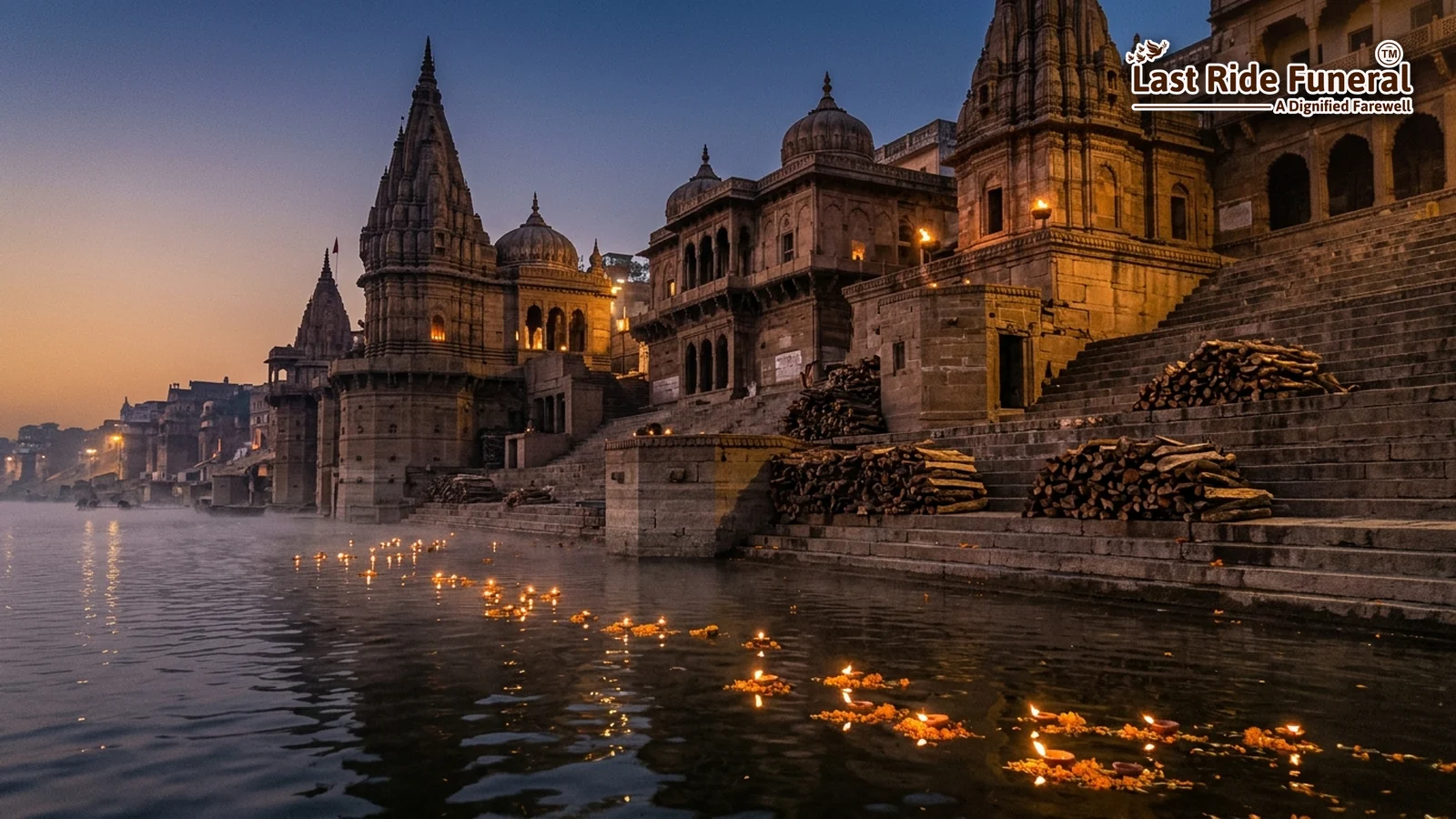
Across the sacred riverfront of Kashi (Varanasi), where the timeless flames of Manikarnika and Harishchandra Ghats have burned uninterrupted for thousands of years, thousands of families journey each year to perform the ultimate sacrament of Antyesti—the last sacrifice. Believers hold that dying or being cremated in Varanasi breaks the eternal cycle of rebirth (Samsara), granting instantaneous Moksha (liberation).
Yet, visitors, international travelers, and pilgrims occasionally witness or read about a startling phenomenon: during traditional open-pyre cremations on the riverbank, why do parts of human bodies sometimes remain unburnt before the remains are immersed in the holy Ganges? Is it due to spiritual mysticism, an ancient ritual requirement, or basic physical thermodynamics?
At Last Ride Funeral, where our senior mortuary directors and Vedic coordinators manage sacred last rites, long-distance hearse transfers, and Asthi Visarjan travel arrangements from Delhi NCR to sacred riverbanks, we answer this deeply misunderstood question with scriptural fidelity, anatomical reality, and operational truth.
1. The Physics and Thermodynamics of Open-Air Pyre Cremation
To understand why parts of a human body might resist complete combustion on an open riverfront pyre, one must examine the thermal dynamics of traditional wood burning versus closed industrial furnaces.
+---------------------------------------------------------------------------------------------------+
|                        THERMAL DYNAMICS: OPEN RIVERFRONT PYRE VS. CLOSED CREMATORIUM             |
+------------------------------------+----------------------------------+---------------------------+
| Parameter                          | Open Wooden Pyre (Varanasi Ghat) | Modern Electric / CNG     |
+------------------------------------+----------------------------------+---------------------------+
| Operating Temperature              | 600°C – 800°C (fluctuating)      | 900°C – 1150°C (uniform)  |
| Airflow & Draft                    | Natural river breezes / gusts    | High-velocity oxygen blow |
| Water Content Evaporation          | Gradual, wind-cooled surface     | Instantaneous dehydration |
| Dense Anatomical Zones (Pelvis)    | Requires prolonged direct heat   | Complete thermal reduction|
| Time Required                      | 3.5 to 5 Hours                   | 75 to 90 Minutes          |
+------------------------------------+----------------------------------+---------------------------+
The Caloric Challenge of the Human Body
The human body is composed of approximately 65% to 70% water by weight. When placed upon a wooden pyre, combustion cannot consume muscle tissue or bone until latent water is completely boiled away.
- Riverfront Wind Chill & Heat Dissipation: Manikarnika Ghat sits right at the concave bend of the Ganga. Gusting river winds accelerate heat dissipation on the windward side of the pyre. While the inner core of the pyre might reach 800°C, the outer edges can drop below 450°C.
- Dense Bone Structure in Specific Genders: In biological males, the dense, thick pelvic girdle and the heavy sternum/chest plate require the highest concentration of prolonged caloric energy. In biological females, the pelvic basin is wider and carries different bone density, occasionally leaving parts of the pelvic ring unconsumed if firewood is damp or depleted.
- Quality and Moisture of Firewood: A full open-air cremation requires between 300 kg and 450 kg of seasoned hardwood (typically Babul, Mango, Sal, or sacred Sandalwood). During monsoon months or periods of high atmospheric humidity, even well-stacked logs burn at lower temperatures, slowing the reduction of dense tissues.
2. The Sacred Role of the Dom Raja Community: The Custodians of the Pyre
At Varanasi’s cremation ghats, the sacred fire has been guarded for centuries by the hereditary custodians known as the Dom Raja clan. Legend traces their heritage back to King Harishchandra and Rishi Vishwamitra.
The Doms are master artisans of pyre construction:
– Calculating the Wood-to-Mass Ratio: A senior Dom worker assesses the height, build, and weight of the deceased, selecting specific log girths to build a cradle that holds the embers directly beneath the heaviest anatomical centers.
– Tending the Fire (Karava): Throughout the three-to-four-hour burn, attendants use long green bamboo poles to gently reposition logs, ensuring that heat remains trapped directly around the torso and pelvic core.
– The Sacred Five Embers: No pyre in Kashi can be ignited by ordinary matches; it is lit exclusively with embers drawn from the eternal, sacred Dhuni fire kept alive at the Dom Raja sanctuary.
When families have limited financial means and purchase fewer kilograms of wood than anatomically required, the wood supply may burn out before the thickest skeletal structures are completely turned to ash.
3. Scriptural Exceptions: Who Is Never Cremated in Varanasi?
Not all bodies brought to the Varanasi ghats are placed upon funeral pyres. In fact, many reports of bodies being immersed directly into the Ganga stem from a complete misunderstanding of Jalasamadhi (sacred river immersion).
According to ancient Dharmashastras and the Garuda Purana, five specific categories of people are considered spiritually pure or exempt from fire cremation:
                  ┌──────────────────────────────────────────────┐
                  │       The 5 Sacred Categories of Jalasamadhi │
                  └──────────────────────┬───────────────────────┘
                                         │
        ┌──────────────┬─────────────────┼─────────────────┬──────────────┐
        ▼              ▼                 ▼                 ▼              ▼
   【 Holy Saints 】 【 Young Children 】【 Snakebite Victims 】【 Pregnant Mothers 】【 Leprosy / Smallpox 】
   Sanyasis who      Infants & kids      Believed to be in   Carrying unborn    Considered diseased
   renounced fire    without karmic ties temporary coma      sacred jiva        cleansed by Ganga
- Sanyasis and Enlightened Ascetics: Holy saints who have undergone Viraja Homa have already renounced their worldly identities and symbolically cremated their egos. Their bodies are placed in meditative lotus posture (Padmasana) and surrendered directly to the sacred depths of the river. (Read our detailed guide on why saints and children are buried in Hindu tradition).
- Infants and Young Children (Under 5 Years): Because their subtle souls (Sukshma Sharira) have not accumulated karmic debts (Sanchita Karma), they require no purificatory fire (Dahana Samskara).
- Victims of Snakebite (Naga Dosha): Ancient Vedic physicians held that venom induced a deep suspended animation that could potentially reverse, so the body was set adrift on a banana-raft (Bhela) down the river.
- Pregnant Women: A mother carrying an unborn child cannot be cremated because fire would sacrifice two lives in one pyre.
When observers see these non-cremated bodies on the river, they mistakenly assume they are “unburnt pyre remains,” when in truth they are intentional Vedic Jalasamadhi offerings.
4. The Vedic Protocol for Unburnt Remains: Asthi Chayan & Ganga Visarjan
What does Vedic scripture dictate when parts of the skeletal structure survive the pyre?
In traditional Vedic Antyesti, the physical body is never expected to dissolve into non-existent vapor. The entire purpose of the fourth day ceremony—known as Asthi Sanchayana—is to gather the sacred bone fragments (Asthi) that survive the fire.
- In an open wood pyre, dense fragments of the skull (celebrated in the splitting of the skull Kapala Kriya ritual), the hip joints, and vertebrae are purposely recovered.
- These remaining bone relics are washed with raw cow’s milk, Gangajal, and sanctified with honey before being consigned to holy waters.
- At Manikarnika Ghat, once the fire cools, the attendants wash the residual embers with river water. Surviving bone fragments are collected by the chief mourner (Karta) and gently immersed into the deep channel of the Ganges with prayers for final liberation.
5. Modern Environmental Reforms on the Ghats
In recent decades, significant municipal, technological, and environmental improvements have been introduced along the riverfront to ensure hygiene, environmental cleanliness, and dignity:
- Electric and Eco-Friendly Crematoria: Harishchandra Ghat now features modern electric and gas cremation facilities running parallel to traditional wooden pyres, offering zero-smoke, complete thermal reduction.
- Trained River Cleaning Units & Jal Police: The Clean Ganga Project (Namami Gange) maintains specialized patrol boats and skimming barriers downstream from the burning ghats to ensure that unburnt debris never pollutes the riverway.
- Subsidized Firewood Stalls: Municipal authorities in Varanasi maintain monitored firewood depots to prevent families from falling short of the required timber tonnage due to economic hardship.
More From Last Ride Funeral
6. Frequently Asked Questions (FAQs)
Why do some bodies not burn completely during cremation in Varanasi?
In open-air riverbank pyres at Manikarnika or Harishchandra Ghats, incomplete burning is primarily caused by thermodynamics: gusting river breezes dissipating pyre heat, high moisture content in seasonal firewood, or an insufficient quantity of timber for dense bone regions like the pelvis or chest plate.
How much firewood is required to completely burn a body on an open pyre?
An average adult human body requires between 300 kg and 450 kg of seasoned hardwood (such as Babul, Mango, or Sal) and approximately 3.5 to 5 hours of continuous burning to achieve proper skeletal reduction in an open-air riverfront environment.
Who are the Dom Raja, and what is their role in Varanasi cremations?
The Dom Raja community are the ancient, hereditary guardians of the sacred cremation grounds in Kashi. They maintain the eternal holy flame, build the structural wood pyres according to the deceased’s physical build, and ensure the fire is tended with respect and scriptural discipline.
Are whole unburnt bodies thrown into the Ganges in Varanasi?
No. The bodies seen immersed directly in the river are not abandoned pyre remains; they are individuals spiritually exempt from fire cremation under Vedic law (Jalasamadhi)—specifically holy sanyasis, young children under 5 years, pregnant women, and snakebite victims.
What is done with the remaining bones (Asthi) after the pyre cools?
Vedic scriptures mandate the collection of remaining bone fragments (Asthi Sanchayana). At Manikarnika Ghat, the family and chief mourner collect these sacred relics, sanctify them with cow’s milk and Gangajal, and immerse them into the deep flowing currents of the Ganges with Vedic prayers.
Is electric cremation available in Varanasi?
Yes. Harishchandra Ghat operates a modern municipal electric and gas crematorium, allowing families an eco-friendly, rapid, and complete thermal reduction process while retaining the spiritual merit of performing last rites in Kashi.
Does incomplete burning affect the soul’s journey to Moksha?
No. According to Hindu theology, once the Kapala Kriya (breaking of the skull) and Agni Samskara are initiated with Vedic mantras, the Prana is freed and the subtle body departs. Physical bone remnants represent the gross physical element (Prithvi Tatva) returning to nature and do not hinder the soul’s liberation.
How can families in Delhi NCR arrange transport and Asthi Visarjan in Varanasi?
Last Ride Funeral provides 24/7 dedicated assistance from Delhi NCR to Varanasi, Haridwar, and Garhmukteshwar. We arrange sanitized hearse vehicles, experienced Vedic pandits, Asthi urn transport kits, and boat arrangements on the ghats. Call our 24/7 helpline at +91 92171 79989 for complete guidance.
Summary & Compassionate Guidance
The sight of open-air cremations along the sacred riverbanks of Kashi is one of humanity’s most profound reminders of impermanence (Anitya). While myths and sensational rumors often surround the ghats of Varanasi, the realities of unburnt remains come down to simple thermal physics, the craftsmanship of the pyre custodians, and legitimate Vedic customs like Jalasamadhi.
For families seeking dignified last rites, inter-city dead body transportation, or sacred river pilgrimage arrangements from Delhi NCR:
- 24/7 Emergency Helpline: +91 92171 79989
- Official Website: https://lastridefuneral.in/
- Services: Hearse Transport, Embalming, Antim Sanskar Samagri, Pandit Booking & Asthi Visarjan Logistics.