The Shattered Water Pot: The Vedic Ritual of Breaking the Earthen Ghada
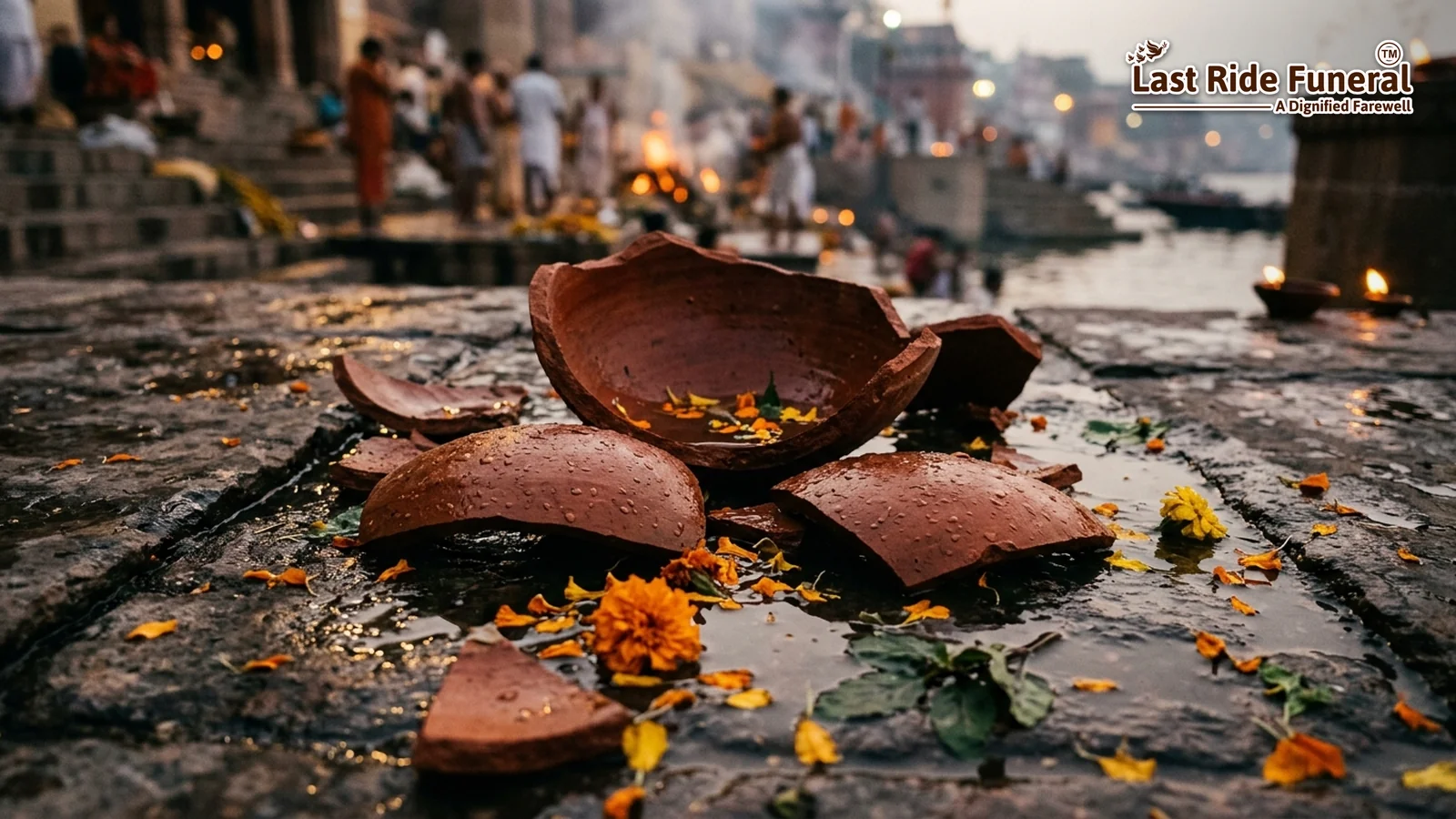
Few moments in Vedic funeral rites (Antyesti) carry as much quiet, heartbreaking beauty as the ritual of the earthen water pot (Kumbha or Ghada). Right before the pyre is ignited, the chief mourner circles the departed three times carrying a clay pot brimming with holy water. With each circumambulation, the pot is pierced, letting a thin stream of water trickle upon the ground. Upon the third circle, the mourner drops the pot behind their back, allowing it to shatter completely onto the stone earth—and walks away without looking back.
For families standing at Delhi’s cremation grounds—whether at Punjabi Bagh Cremation Ground or Lodhi Road—this act marks the definitive psychological and spiritual transition from life to the beyond. At Last Ride Funeral, our Vedic coordinators guide families through this ritual, helping them understand that the shattered pot is not an ending, but an awakening to cosmic truth.
The Symbolism of the Clay Pot: Body and Soul
In Hindu philosophy, the human body is repeatedly likened to a Mrit-Kumbha—an earthen vessel molded from simple clay, dried by the sun, and animated by divine consciousness:
- Clay as the Mortal Vessel: The clay pot represents the physical form (Sthula Sharira). Just as clay is taken from the earth and shaped into a functional container, the biological body is formed from the elements of the earth to house the soul for a temporary span.
- Water as the Life-Force (Prana): The water contained within the pot represents the vital breath and individual consciousness. While the water remains inside the pot, it takes the shape, boundary, and limitation of that specific vessel.
- The Puncture Holes: As the Karta walks around the pyre, the priest punctures a hole in the pot with a small stone (Ashma). The water leaking out serves as a stark visual metaphor: with every passing moment and breath, earthly lifespan drains away inevitably, drop by drop.
Step-by-Step Ritual Sequence
The breaking of the water pot follows an ancient, precise Vedic protocol:
- The Preparation: The clay pot is filled with fresh water, often blessed with drops of sacred Ganga water and basil (Tulsi) leaves.
- The Counter-Clockwise Circles (Apradakshina): Unlike celebratory temple circumambulations which are clockwise, funerary circumambulations are performed in reverse (Apradakshina), signifying the unwinding of worldly life and the reversal of the physical journey back to cosmic origin.
- Three Progressive Piercings:
- First Round: One hole is made near the base; water begins trickling out.
- Second Round: A second hole is pierced slightly higher, accelerating the flow.
- Third Round: A third hole is made near the neck; the water rushes out, symbolizing the final exhalation.
- The Shattering Behind the Back: Standing near the head of the pyre with their back turned away, the chief mourner casts the pot over their shoulder, smashing it to fragments upon the ground.
The Sacred Injunction: Why You Must Never Look Back
Immediately after the pot shatters, the priest firmly commands the chief mourner and immediate relatives: “Do not turn around. Walk forward.”
This strict injunction contains deep psychological and spiritual wisdom:
- Severing Subtle Attachment: Vedic texts, including the Garuda Purana, state that the disembodied soul remains acutely aware of its physical family in the immediate aftermath of death. If the family gazes back longing for what was, the soul feels trapped by emotional gravity, struggling to ascend.
- Psychological Acceptance of Finality: In human grief, denial is powerful. When an earthen pot breaks, it can never be reconstructed. The sound of the shattering clay delivers an unvarnished auditory truth to the subconscious mind: the physical journey of this loved one has ended. Walking away without looking back establishes the necessary emotional boundary for healing to begin.
- Liberation of the Elemental Soul: Once the pot is broken, the remaining water spills freely into the soil. The water is no longer “pot water”; it has merged back with the earth. Similarly, the individual soul (Jivatman) is freed to rejoin the infinite universal consciousness (Paramatman).
Observing the Ritual in Modern City Crematoriums
In high-density Delhi NCR facilities such as Nigambodh Ghat or Dwarka Sector 24 Crematorium, cremation platforms are surrounded by structured stone flooring and automated token desks. Even here, the tradition remains uncompromised:
- Clean Earthen Samagri: Certified organic clay pots without chemical glazing are sourced by Last Ride Funeral’s on-ground coordinators, ensuring rapid natural absorption.
- Priestly Guidance: Our experienced Vedic pandits ensure that elderly Kartas or grieving sons who are overwhelmed by tears are gently supported by the arm, ensuring the three rounds and pot drop are conducted safely and calmly.
- The Ashma Stone Custody: The stone used to puncture the pot (Ashma or Preta Shila) is carefully preserved for the subsequent ten-day ancestral rites (Pinda Daan), serving as the focal point for the daily water offerings (Tarpan).
24/7 Funeral Support & Assistance
For immediate, respectful funeral assistance, hearse van transport, Vedic pandit services, or crematorium coordination across Delhi NCR, contact Last Ride Funeral:
- 24/7 Helpline: +91 92171 79989
- Official Website: https://lastridefuneral.in
Frequently Asked Questions
Why is the water pot made of raw clay instead of metal?
Raw earthenware symbolizes the transient human body molded from natural dust. Unlike durable brass or steel, clay is inherently fragile; its instantaneous destruction reminds mourners of the brittle, ephemeral nature of mortal life.
Why does the mourner circumambulate anti-clockwise (Apapradakshina)?
Anti-clockwise motion denotes the unwinding and termination of worldly affairs. Clockwise circuits (Pradakshina) celebrate life, growth, and divine devotion; reverse circuits signify the dissolution of mortal existence back into nothingness.
What is the spiritual significance of the trickling water?
The water escaping through the pot’s piercing symbolizes the constant, irreversible leakage of mortal time. Every drop represents an elapsed second of destiny that can never be recovered.
Why is looking back strictly prohibited after breaking the pot?
Looking back represents emotional regression and clinging attachment (Moha). Walking away decisively commands the living to embrace acceptance, while signaling to the departing spirit that its mortal home is irrevocably dissolved.
Who holds the clay pot if there is no biological son?
If a biological son is absent, the ritual can be performed by an adopted son, younger brother, grandson, son-in-law, or nephew. In modern times, daughters are increasingly performing these rites with full Vedic dignity.
Why are exactly three rounds taken around the funeral pyre?
The three rounds symbolize the settlement of the three primal debts in Hindu philosophy: Deva Rina (debt to deities), Rishi Rina (debt to sages and gurus), and Pitri Rina (debt to ancestors and parents).
Can ordinary tap water be used in the pot, or is sacred water required?
While clean tap water can form the base, it is customary to blend in sacred Ganga water, tulsi (basil) leaves, and kusha grass to consecrate the pot and cleanse the funeral grounds.
How is the shattered pot ritual conducted at modern electric crematoriums?
At electric or CNG crematorium facilities, the three reverse rounds with the pierced earthen pot are completed around the ceremonial bier inside the prayer hall immediately prior to automated furnace entry, ensuring sacred tradition is preserved without safety risks.


Comments