The Exception: Why Saints, Sadhus and Children Are Buried in Hindu Tradition
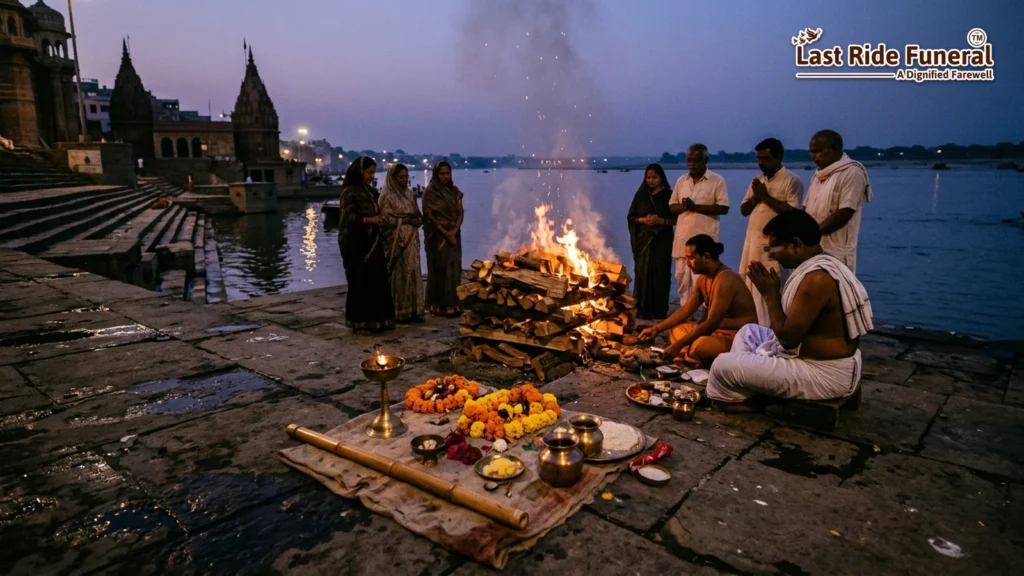
In Sanatana Dharma, cremation (Daha Sanskar) is widely regarded as the universal final rite for adults. Across Delhi’s sacred cremation grounds—from Lodhi Road to Dwarka Sector 24—the crackle of wood pyres and the warmth of Agni are familiar sights. Yet, deep within Vedic law (Dharma Shastras) and the Garuda Purana, there exists a striking, intentional exception: Enlightened saints (Sanyasis) and young children are traditionally buried, not cremated.
To those unfamiliar with Vedic metaphysics, this contrast may seem contradictory. Why would a faith that considers fire the ultimate purifier deny fire to its most venerated holy figures and its most innocent souls?
At Last Ride Funeral, our Vedic pandits and senior coordinators frequently navigate these delicate situations for families across Delhi NCR. The answer lies not in discrimination, but in a profound spiritual truth: Cremation is a process of purification and detachment. Those who possess no worldly attachment require no fire.
The True Purpose of Cremation: Purification and Detachment
To understand the exception, one must first understand what the funeral pyre achieves for an ordinary householder (Grihastha):
- Burning Accumulated Karma: An adult lives decades in the material world, accumulating sensory impressions (samskaras), desires (vasanas), debts, and emotional knots.
- Severing Physical Identification: The ego (Ahamkara) fiercely identifies with its physical mirror. When death strikes, the soul often clings stubbornly to its familiar flesh. The roaring fire forcibly breaks this magnetic grip, reducing the vessel to ash and compelling the subtle body (Sukshma Sharira) to embark on its onward journey.
Fire is, therefore, a tool of forced spiritual emancipation. When an individual already possesses natural purity or has transcended bodily identification, the necessity for fire disappears entirely.
1. Why Young Children Are Buried (Bala Samadhi)
In Vedic tradition, infants, toddlers, and young children (typically before the sacred thread ceremony or the onset of puberty, around 5 to 7 years of age) are accorded Bhoo Samadhi (earth burial) or, historically, Jala Samadhi (water consignment):
- Innocence and Absence of Ego: A young child has not developed personal ego, greed, malice, or karmic entanglement. Their mind is untainted by material conditioning. When a child passes away, the soul departs spontaneously and cleanly, with zero residual attachment to the physical form.
- No Desires to Burn: Because the child accumulated no sanchita (stored) or prarabdha (active) karma in this lifetime, there are no karmic impurities that require the purgation of Agni.
- Tender Nature of the Vessel: Vedic scriptures regard subjecting the delicate body of an infant to intense pyre flames as spiritually unnatural and needlessly harsh. Instead, the tender form is gently committed back to Mother Earth (Prithvi), resting peacefully in the womb of nature.
- No Shraddha Obligations: Because children have not entered household life or generated ancestral debts, there are no mandatory 13-day Terahvin rites or Pinda Daan obligations.
2. Why Saints, Sadhus and Yogis Are Buried (Bhoo Samadhi)
The reason for burying enlightened masters (Sanyasis, Sadhus, and Avadhutas) is the polar opposite of childhood innocence—it is the culmination of total spiritual mastery:
A. The Sanyasi Has Already Been Cremated While Alive
When an ascetic takes formal vows of renunciation (Sanyasa Diksha), they perform the ancient rite of Viraja Hawan. In this solemn ceremony, the seeker conducts their own funeral rites, offering their worldly identity, ego, family ties, and caste obligations into the sacred fire.
Philosophically, a Sanyasi died to the material world decades ago. Having already passed through the fire of renunciation, subjecting their discarded body to a physical funeral pyre would be redundant.
B. Internalized Fire (Tapasya and Kundalini)
An ordinary person requires external physical fire (Agni) to incinerate bodily impurities. A realized yogi, through lifelong Pranayama, meditation, and severe austerities (Tapas), has already awakened the internal fire of consciousness (Jnanagni). This spiritual flame has thoroughly burned all karmic seeds (Karmashaya) from within.
C. A Consecrated Shrine, Not a Corpse
In Hindu metaphysics, an ordinary deceased body is called a Shava (inanimate matter requiring swift disposal). In contrast, the physical shell of a realized saint is regarded as a Samadhi Sthala—a consecrated spiritual battery saturated with high-frequency meditative vibrations (Chaitanya).
- The Seated Padmasana Posture: Rather than lying recumbent, saints are placed in a seated yogic posture (Padmasana or Siddhasana), preserving the alignment of the chakras.
- Preservation in Salt and Sacred Samagri: The burial pit is filled with hundreds of kilograms of rock salt, camphor, sacred ash (Vibhuti), sandalwood, and dry bilva leaves. The salt naturally mummifies and preserves the remains, anchoring spiritual energy to the soil.
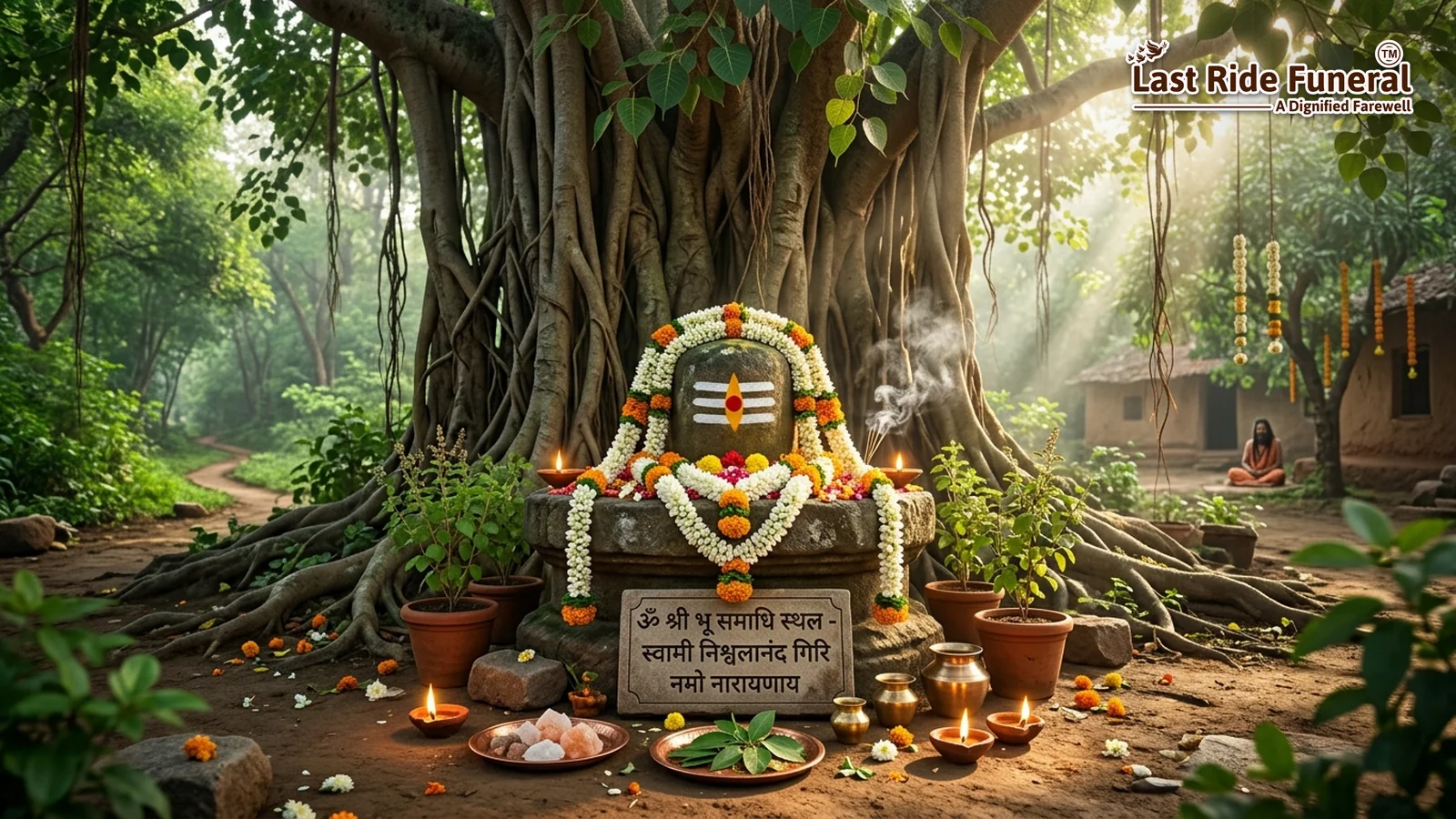
- A Permanent Temple (Brindavanam): A sacred structure or Shiva lingam is frequently established above the Samadhi, transforming the site into a permanent pilgrimage center where devotees meditate for generations.
Overview: Cremation vs. Samadhi
| Dimension | Householder (Grihastha) | Child (Bala) | Ascetic / Saint (Sanyasi) |
|---|---|---|---|
| Primary Rite | Cremation (Daha Sanskar) | Earth Burial (Bhoo Samadhi) | Seated Samadhi Burial |
| Spiritual State | Accumulated worldly karma | Unconditioned innocence | Transcended karmic ego (Jivanmukta) |
| Posture | Recumbent (horizontal) | Recumbent (gentle) | Upright (Padmasana / Lotus) |
| Preservation Agent | Wood, camphor, cow ghee | Clean cloth, organic soil | Rock salt, vibhuti, bilva leaves |
| Purification Need | High (Agni breaks attachments) | None (pure soul) | Completed in life via Viraja Hawan |
On-Ground Guidance for Families in Delhi NCR
When a family faces the tragic loss of a child or must fulfill the final samadhi wishes of an elder sadhu or guru, standard municipal cremation routines can feel confusing. At Last Ride Funeral, our compassionate team provides specialized support across Delhi NCR:
- Designated Samadhi Grounds: Assisting families with legal and municipal permissions for recognized burial spaces, such as dedicated infant burial grounds and monastic samadhi ashrams.
- Organic Burial Samagri: Sourcing unbleached cotton, sacred soil, cow dung cakes, rock salt, and consecrated tulsi garlands required for authentic Vedic burial.
- Gentle, Dignified Transport: Providing private, sanitized hearse vans and emergency ambulances operated with silence and utmost reverence.
24/7 Funeral Support & Assistance
For immediate, respectful funeral assistance, hearse van transport, Vedic pandit services, or crematorium coordination across Delhi NCR, contact Last Ride Funeral:
- 24/7 Helpline: +91 92171 79989
- Official Website: https://lastridefuneral.in
Frequently Asked Questions
Up to what age is a child accorded burial instead of cremation?
According to the Garuda Purana and Manu Smriti, children who have not developed teeth or are under the age of two (and up to five in certain regional traditions) are accorded burial or water immersion rather than cremation.
Why is fire purification considered redundant for saints and yogis?
Cremation is a purificatory rite intended to burn away worldly sins and karmic bonds. Enlightened ascetics have already incinerated their desires through years of meditation, making post-mortem fire purification redundant.
What is the Viraja Homa performed during Sannyasa diksha?
Viraja Homa is a sacred Vedic sacrificial fire lit when an initiate takes sannyasa vows. During this ceremony, the renouncer conducts their own living funeral rites (Jiva Shraddha), formally dying to the material world.
Why are saints buried in a seated yogic posture with rock salt?
The seated lotus posture (Padmasana) reflects unceasing meditation. Rock salt, camphor, and sandalwood naturally preserve the physical form, prevent odor, and maintain the sanctified energy field of the Samadhi shrine.
Are regular 13-day funeral rites (Terahvi) performed for ascetics?
No. Since sannyasis have severed all family and ancestral ties, regular Shraddha, Pinda Daan, and Ashaucha (mourning impurity) are not observed. Instead, disciples organize a commemorative prayer ceremony called Aradhana or Bhandara.
Can a deceased infant be buried in an ordinary cemetery or garden?
Traditional scriptures prescribe burial in designated holy grounds, riverbanks, or clean natural earth near running water. Modern urban families utilize designated burial sections within recognized municipal cremation and burial grounds.
What is Jal Samadhi, and when is it practiced?
Jal Samadhi involves committing the sacred mortal remains of an ascetic or infant to a flowing holy river, weighted with stones. Due to environmental considerations, Bhoo Samadhi (earth interment) is now the preferred practice.
What happens to the burial site (Samadhi Mandir) of an enlightened saint over time?
Because the body of a yogi retains high spiritual vibrations, the Samadhi Sthal is consecrated with a Shiva lingam or Tulsi shrine, evolving into a place of pilgrimage, meditation, and blessings for future generations.