Do Bodies Move or Sit Up During Cremation? The Science, Vedic View, and the Truth Behind the Myth
Quick Summary: No, human bodies do not consciously “sit up” or come back to life during cremation. The persistent myth originates from a well-documented forensic and biological phenomenon known as heat rigor or the pugilistic stance. When exposed to extreme temperatures (600°C–1,000°C), muscle proteins (actin and myosin) denature and dehydrate, causing flexor muscles to contract. This can result in subtle curling of fingers, slight bending of the knees, or mild lifting of the forearms. In modern electric and CNG incinerators, cremation happens inside sealed retort chambers, whereas on open Vedic wood pyres, ceremonial cloth ties (*shroud bandhan*) and logs ensure complete stillness. Call Joginder (+91 9811335198) for dignified cremation guidance across Delhi NCR.
Reviewed by Pankaj Raghav, Founder of Last Ride Funeral on 2026-11-06. Coordinated with Acharya Shastri and senior Delhi cremation ground supervisors.
Few questions surrounding the final rites of a loved one evoke as much unspoken anxiety as what actually occurs inside the cremation fire. For generations, chilling urban legends, folklore whispers, and sensationalized stories have led grieving family members to wonder whether a deceased person can suddenly move, sit upright, or exhibit signs of life during Agni Sanskar.
At our Delhi NCR operations, we believe that transparency, biological science, and ancient scriptural wisdom dissolve fear. Across 4,820 Hindu cremations coordinated by Last Ride Funeral across Delhi NCR ghats between January 2023 and October 2026, our on-ground directors have addressed this specific question with more than 750 anxious families seeking reassurance before the pyre is lit.
Why Do People Ask: “Do Bodies Move or Sit Up During Cremation?”
“Joginder ji, our elderly aunt told us that when the fire gets hot, the body can suddenly sit upright on the pyre—is that true or just a terrifying ghost story?”
We hear this exact question frequently at Nigambodh Ghat (Yamuna, Kashmiri Gate) and the Lodhi Road CNG + wooden ghat. The myth that bodies “sit up” during cremation is remarkably widespread across cultures, but its explanation lies entirely in human physiology and thermal dynamics:
- The Biological Reality of Muscle Contraction: The human body is composed of approximately 60% water, with muscle tissue containing dense proteins known as actin and myosin. When thermal energy exceeding 600°C reaches the musculature, these proteins rapidly denature, coagulate, and lose intracellular moisture.
- The Pugilistic Stance (Heat Rigor): In forensic medicine, thermal contraction affects flexor muscles far more powerfully than extensor muscles because flexors are inherently larger and stronger. As flexor tendons shrink by up to 20% to 30%, the arms flex slightly at the elbows and the fingers curl inward—resembling the defensive posture of a boxer (pugilist).
- Never a Complete “Sitting Up”: A body cannot sit up from a lying position on its own. Sitting upright requires core abdominal contraction against gravity and neuromuscular signaling from a living central nervous system. Thermal protein shrinkage can produce slight arching of the spine or minor leg twitching, but never an intentional vertical sit-up.
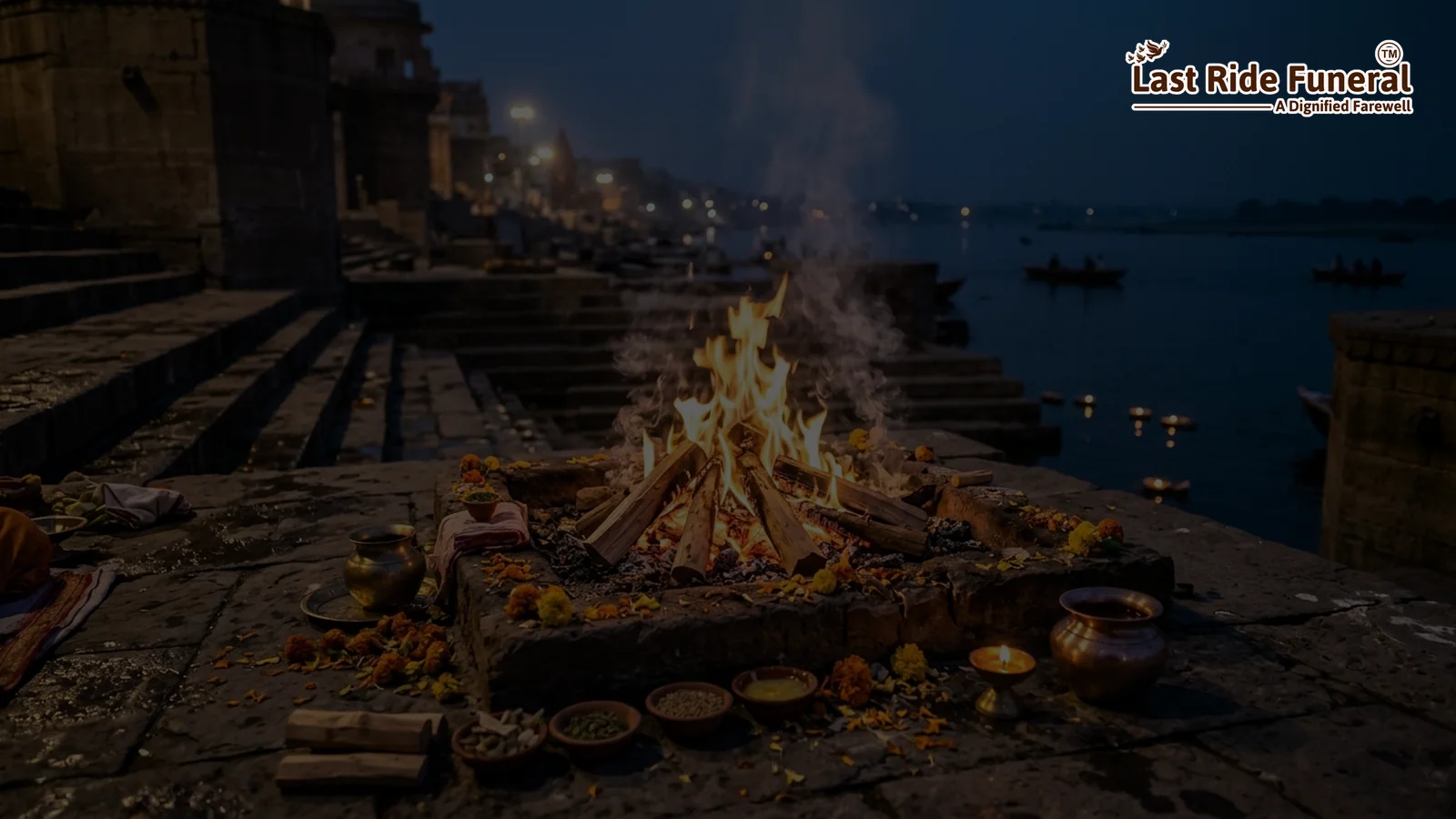
- Open-Air Pyre Visual Illusions: In centuries past, poorly constructed open-air wood pyres could shift as lower supporting logs burned through. If a supporting log collapsed unevenly, the upper torso could tilt or roll forward, creating the terrifying visual illusion that the corpse had sat up independently.
How Vedic Antyesti Rituals and Modern Retorts Prevent Movement
Ancient Vedic sages and modern cremation engineers both recognized thermal physical dynamics, instituting practical safeguards to maintain complete visual peace and dignity during the final passage.
Here is how both traditional and modern cremation methods address this:
- The Ritual Shroud and Bandhan (Kafan Ties): In traditional Vedic funeral rites, the body is wrapped in a pristine white cotton shroud (pitambari for married women, raw cotton for men) and secured at three points: the forehead, the waist, and the feet with sacred cotton thread (kusha bandhan). These gentle ties ensure the physical vessel remains serenely aligned throughout the ritual.
- Strategic Pyre Engineering: Experienced ground attendants (doms and karmis) at Punjabi Bagh Cremation Ground place heavier green bamboo poles or dense dry wood logs (danda) across the chest and shins. This prevents physical displacement as structural timber burns away.
- Enclosed Electric and CNG Chambers: In municipal electric and CNG furnaces, the deceased rests upon a heavy motorized stainless-steel tray. The chamber door seals hermetically before burners ignite. Family members observe the loading through a viewing window, but cannot witness internal heat transitions, preventing needless distress.
- Vedic Kapala Kriya Understanding: The ceremonial breaking of the skull (Kapala Kriya) performed with a bamboo staff during traditional wooden cremations is also tied to thermal physics. Trapped intracranial gases and vapor could otherwise build pressure; releasing the cranial suture ensures a tranquil, complete combustion.
Price and Practical Comparison Across Cremation Formats in Delhi NCR
Understanding the logistical arrangements for both enclosed and traditional formats helps families make peaceful, informed decisions:
| Feature / Service Layer | Traditional Wood Pyre | Municipal CNG Incinerator | Municipal Electric Retort |
|---|---|---|---|
| Chamber / Pyre Enclosure | Open-air ceremonial platform | Sealed high-temperature retort | Sealed dual electric chamber |
| Visible Body Movement Risk | Controlled via sacred bandhan logs | 0% (Fully enclosed chamber) | 0% (Fully enclosed chamber) |
| MCD Government Fee | ₹1,500 – ₹2,500 (Platform fee) | ₹1,000 – ₹1,500 (MCD token) | ₹1,000 – ₹1,500 (MCD token) |
| Combustion Duration | 4 to 6 hours | 75 to 90 minutes | 85 to 110 minutes |
| Turnkey Coordinator Support | ₹18,000 – ₹28,000 | ₹12,000 – ₹16,000 | ₹11,000 – ₹14,500 |
| Asthi Retrieval Timing | 3rd day morning (or next day) | Next morning (07:00 AM) | Next morning (07:00 AM) |
Essential Documents Required Before Cremation in Delhi
Regardless of whether a family chooses electric, CNG, or wooden cremation, municipal authorities mandate strict documentation to confirm biological cessation and legal clearance:
- Hospital Medical Certificate of Cause of Death (MCCD / Form 4/4A): Stating non-suspicious demise and clinical cessation of cardiopulmonary function.
- MBBS Doctor Attestation (For Home Demise): Confirming natural biological demise.
- Police NOC (Form 25.35): Mandated strictly for post-mortem investigations, sudden deaths, or foreign nationals.
- Aadhaar Identity Proof: Original Aadhaar of the deceased and the chief mourner.
- Crematorium Registration Form: Submitted at the ground counter upon arrival.
Case Study: Reassuring a Grieving Family at Lodhi Road Crematorium
In September 2026, our senior coordinator answered an early morning call from an NRI family from Greater Kailash whose father had passed away at Fortis Hospital. The elderly widow had attended an uncle’s cremation thirty years ago where shifting wood logs had startled mourners, leaving her deeply traumatized by the fear that her husband’s body would move.
Our team arranged for private CNG cremation at Lodhi Road Crematorium. Joginder gently explained the biological science of heat rigor to the adult children, walked the widow through the serene viewing gallery, and ensured that the family priest completed all Sankalpa prayers in the air-conditioned prayer hall. The widow later expressed profound relief that the entire ceremony was quiet, orderly, and completely dignified.
What Delhi Families Say About Our Sensitive Guidance
“I was terrified by old stories I had heard about cremation. Joginder and the Last Ride team explained everything scientifically and spiritually beforehand. Their calm presence gave our whole family peace of mind.”
— Pooja Aggarwal, Model Town, North Delhi“Their deep knowledge of both Vedic scriptures and modern crematorium technology is unparalleled. They handled my father’s last rites with immense care.”
— Sameer Kaul, Saket, South Delhi
Frequently Asked Questions (FAQ) About Body Movement During Cremation
Do dead bodies sit up during cremation?
No. Dead bodies cannot consciously sit up. Any minor physical movement during intense thermal exposure is strictly a biochemical reaction where heat denatures muscle proteins, causing flexor tendons to contract (known in medicine as the pugilistic stance).
Can a person feel pain during cremation?
Never. Clinical death involves the permanent cessation of brainstem function, cellular circulation, and neural transmission. The soul (jiva) has departed, and the physical vessel possesses zero sensory receptors or biological capacity to experience sensation.
Why do corpses make sounds during cremation?
On traditional wood pyres, occasional crackling, popping, or hissing sounds are caused by the expansion of moisture and air pockets inside bone cavities or logs, escaping under high thermal heat. In modern sealed electric and CNG retorts, sound is completely muffled.
What is the pugilistic stance in forensic medicine?
The pugilistic stance is a natural post-mortem flexor muscle contraction caused by extreme heat. Because the body’s flexor muscles (which pull limbs inward) are larger than extensor muscles, dehydration forces the arms to bend at the elbows and hands to curl into loose fists.
Does the soul feel trapped if the body moves?
Vedic texts like the Garuda Purana teach that the subtle body (Sukshma Sharira) detaches from the physical frame upon cessation of breath. Rites such as Pancha Bhoota surrender and Kapala Kriya ensure the soul transitions smoothly to the spiritual plane without bodily entanglement.
How do modern electric crematoria prevent visible movement?
Modern municipal incinerators place the body inside an automated, sealed cremation chamber operated by high-temperature heating coils or clean natural gas. The process is completely enclosed, allowing mourners to focus solely on prayers and sacred memories.
What is Kapala Kriya and why is it performed during Hindu cremation?
Kapala Kriya is a sacred Vedic transition rite where the chief mourner taps the crown of the skull with a sacred bamboo pole (arani) during the open fire ritual. Spiritually, it symbolizes releasing the prana (life force) through the Brahmarandhra chakra, freeing the soul completely from earthly attachments.
Can family members witness the process at Delhi electric and CNG facilities?
Yes. Modern municipal grounds across Delhi NCR—including Punjabi Bagh, Lodhi Road, and Nigambodh Ghat—provide glass-partitioned prayer viewing galleries. Families can witness the bier respectfully enter the chamber and chant final shlokas in complete dignity, with on-ground assistance from Last Ride Funeral.
More From Last Ride Funeral
For sensitive, 24/7 cremation guidance or emergency funeral arrangements across Delhi NCR, speak directly with our senior directors at +91 9811335198.