Can You Wear Black to a Hindu Funeral? White Attire Rules & Mourning Etiquette
For colleagues, NRI relatives, and friends accustomed to Western bereavement traditions, wearing formal black attire is practically second nature when attending a memorial service. In Western and Christian traditions, black represents somber grief, solemnity, and respectful silence.
However, when preparing to attend an Antim Sanskar (Hindu funeral ceremony), cremation ground gathering, or a post-funeral condolence visit in India, a critical question arises:
Can you wear black to a Hindu funeral? What happens if you arrive wearing black? Why is white considered the sacred, non-negotiable mourning color across Sanatana Dharma?
At Last Ride Funeral, our funeral coordinators and Vedic pandits support grieving families across Delhi NCR daily—at Nigambodh Ghat, Lodhi Road Crematorium, Punjabi Bagh, and Dwarka Sector 24. Here, we examine the scriptural rulings of the Garuda Purana, the energetic metaphysics of color in Vedic thought, and the practical dress etiquette for visitors attending a Hindu last rites ceremony.
1. Quick Answer: Should You Wear Black to a Hindu Funeral?
The short answer is no, you should strictly avoid wearing black to a Hindu funeral or condolence visit.
In Sanatana Dharma, wearing black to an Antim Sanskar (cremation), Chautha (prayer meeting), or during the 13 days of Sutak (mourning seclusion) is culturally inappropriate and energetically discouraged:
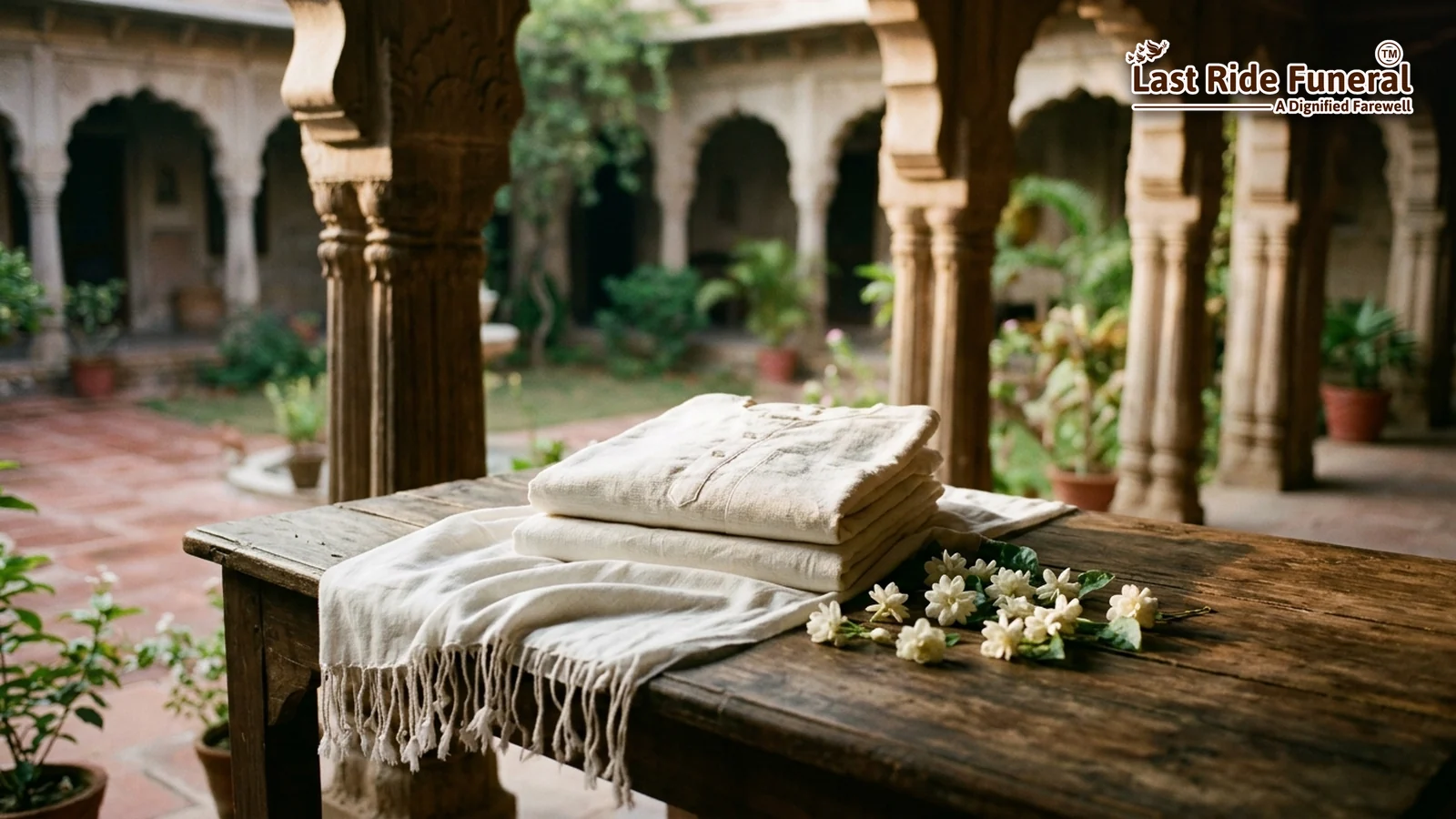
- Traditional Mourning Color: White (Shukla Vastra or Shoka Vastra) is the sacred, universal color of bereavement in Hinduism.
- Symbolism of Black in Hinduism: Black is traditionally associated with Tamas (darkness, inertia, decay), Rahu, and Shani (Saturn). In high-vibration funeral transition spaces, black absorbs negative and destabilized pranic currents.
- Symbolism of White in Hinduism: White represents Sattva (purity, light, transcendence, detachment). It reflects stray astral energies and provides an energetic psychic shield for both the mourning family and attending visitors.
┌────────────────────────────────────────────────────────────────────────────────────────┐
│                    BLACK VS. WHITE IN FUNERAL TRADITIONS: CORE CONTRAST                │
└───────────────────────────────────────────┬────────────────────────────────────────────┘
                                            │
    ┌───────────────────────────────────────┴───────────────────────────────────────┐
    ▼                                                                               ▼
【 Western / Christian Bereavement 】                         【 Sanatana Dharma (Vedic Mourning) 】
 • Color: Formal Black / Charcoal                           • Color: Pure Unadorned White (Shukla)
 • Philosophy: Earthly loss, solemn gravity                 • Philosophy: Eternal soul (Atman) sheds body
 • Emotional Tone: Darkness of sorrow                       • Emotional Tone: Detachment, peace, liberation
 • Energetic Effect: Draws solemn attention                 • Energetic Effect: Deflects astral turbulence
 • Dress Form: Tailored suits, black dresses                • Dress Form: Breathable khadi, cotton kurta/saree
2. Why Is White (Shoka Vastra) Mandatory in Hinduism?
In Hindu philosophy, the physical body is merely an outer garment (Vastra) that the eternal soul (Atman) discards at death, as immortalized in the Bhagavad Gita (Chapter 2, Verse 22):
“Vasamsi jirnani yatha vihaya, navani grhnati naro ‘parani…”
(Just as a person discards worn-out garments and puts on new ones, so the embodied soul discards worn-out bodies and enters new ones.)
Death in Vedic thought is not the end of existence, but an essential transformation and spiritual transition. The mandate to wear white (Shoka Vastra) serves four profound purposes:
+----------------------------------------------------------------------------------------------------+
|                         THE 4 VEDIC PILLARS OF WHITE MOURNING ATTIRE                               |
+--------------------+------------------------------------+------------------------------------------+
| Pillar             | Spiritual & Energetic Function     | Practical & Psychological Impact         |
+--------------------+------------------------------------+------------------------------------------+
| 1. Sattvic Shield  | White reflects subtle light waves  | Protects the visitor's aura from         |
|                    | and repels stray pranic turbulence | dense grief energy (Shoka Spandana)      |
+--------------------+------------------------------------+------------------------------------------+
| 2. Renunciation    | Unbleached white cotton mirrors    | Erases socio-economic vanity, wealth,    |
|    & Equality      | simplicity of ascetic life         | and social hierarchy in face of death    |
+--------------------+------------------------------------+------------------------------------------+
| 3. Soul Transition | Helps the departed soul (*Preta*)  | Vibrant colors agitate the subtle soul;  |
|    Detachment      | sever its earthly attachments      | white signals tranquil spiritual release |
+--------------------+------------------------------------+------------------------------------------+
| 4. Thermal Comfort | Crematorium pyres radiate intense  | Keeps attendees cool under blazing heat  |
|    at the Ghat     | heat (wood fires exceed 900°C)     | and open-air Indian weather              |
+--------------------+------------------------------------+------------------------------------------+
1. The Psychic and Pranic Shield
During a cremation, the subtle life energies (Pranas) untangle from the physical elements. The cremation ground (Shamshan Bhumi) is charged with powerful elemental forces. In Vedic occult science, dark pigments—especially deep black—absorb electromagnetic, thermal, and subtle astral frequencies. White, by contrast, reflects light and psychic impressions, insulating the wearer from lingering grief-waves (Shoka).
2. Eliminating Ego and Social Status
In traditional Indian mourning, wearing plain, unstitched, or simple unadorned white cotton erases all markers of wealth, caste, and social vanity. At the edge of the funeral pyre, king and commoner stand as equals. Colorful, embellished silks or sharp designer suits draw attention to the individual ego, which violates the sacred solemnity of death.
3. Aiding the Soul’s Journey (Preta Mukti)
According to the Garuda Purana, for several days following physical demise, the subtle body of the departed observes its living kin. Vibrant colors, reds, golds, and celebratory patterns stimulate earthly desires and emotional clinging. Simple white clothing signals to the departing consciousness that earthly duties are concluded and it must proceed toward its higher journey without backward glance.
3. What Should Men, Women & Visitors Wear to a Hindu Funeral?
If you are attending an Antim Sanskar at a cremation ground or visiting a family during the 13-day Sutak period, here are the universally accepted attire guidelines:
+----------------------------------------------------------------------------------------------------+
|                         RECOMMENDED FUNERAL ATTIRE BY ATTENDEE CATEGORY                            |
+--------------------+------------------------------------+------------------------------------------+
| Category           | Recommended Attire (Best Choice)   | Acceptable Alternatives                  |
+--------------------+------------------------------------+------------------------------------------+
| Men (Family / Kin) | White cotton Kurta-Pyjama or Dhoti | Simple light-colored cotton trousers     |
|                    | (unstitched white cloth during pyre)| and pale beige / off-white shirt        |
+--------------------+------------------------------------+------------------------------------------+
| Men (Visitors /    | White or off-white Kurta-Pyjama;   | Very pale neutrals (cream, light beige,  |
| Colleagues)        | plain white cotton shirt & trousers| soft light grey); no bold patterns       |
+--------------------+------------------------------------+------------------------------------------+
| Women (Family /    | Plain white cotton Saree or simple | Light pastel salwar suit; minimal or     |
| Relatives)         | white Salwar-Kameez with Dupatta   | zero gold/diamond jewelry                |
+--------------------+------------------------------------+------------------------------------------+
| Women (Visitors /  | White, ivory, or pale pastel       | Light muted earth-tones; simple flat     |
| Colleagues)        | Salwar-Kameez or modest linen suit | footwear; no makeup, perfume, or reds    |
+--------------------+------------------------------------+------------------------------------------+
Critical Rules to Keep in Mind:
- Never Wear Red, Bright Yellow, or Gold: Bright reds, crimsons, and bridal hues (Sindoor and Suhaag colors) are strictly forbidden at funerals as they belong to joyful celebrations like weddings and pujas. (The sole exception: a deceased married woman whose husband is alive is draped in a red suhaag shroud by family tradition).
- Avoid Leather Items: Genuine leather belts, wallets, and shoes should be left in your car or at home. Cremation grounds and mourning prayer spaces are sacred Vedic precincts where dead animal hide is considered ritually impure.
- Footwear Etiquette: You will be required to remove your footwear before stepping onto the cremation platform (Dah Sanskar Chabutara) and before entering the mourning family’s home. Wear simple slip-on sandals or modest footwear without complex laces.
- Modesty and Coverage: Shoulders, chests, and knees must be completely covered. Sleeveless tops, shorts, beachwear, or distressed denim are considered deeply disrespectful.
4. What If You Don’t Own White Clothes? Practical Alternatives
For colleagues, foreign travelers, or expatriates who find themselves invited to a funeral on short notice and possess no traditional white Indian garments:
- What to Wear: Opt for the lightest, most muted solid colors in your wardrobe: pale cream, soft ivory, beige, light oatmeal, or faint dove-grey. A simple light-colored polo shirt, a modest button-up linen shirt, or a plain light cardigan is fully acceptable.
- What to Strictly Avoid: Solid black jackets, dark navy suits, charcoal coats, crimson shirts, fluorescent athletic wear, and clothing with large commercial logos or humorous slogans.
- The Cultural Reality in Delhi NCR: Families appreciate your presence and sincere condolences far more than perfection in wardrobe. However, arriving in head-to-toe solid black makes you stand out jarringly in a sea of white mourning attendees, causing unintended awkwardness.
5. What Happens If Someone Accidentally Wore Black?
If you realized after arriving that you wore a black shirt or dark jacket, do not panic:
- Remove Outer Dark Layers: If you are wearing a black blazer or dark cardigan over a lighter inner shirt, quietly take off the jacket and leave it in your vehicle.
- Step to the Perimeter: Keep a quiet, respectful posture toward the outer perimeter of the gathering rather than positioning yourself immediately beside the pyre or the chief mourners.
- No Bad Luck or Curse: While Vedic tradition discourages black due to its energetic density, Sanatana Dharma holds that your inner Bhava (intent of compassion and respect) matters most. You have not committed an unforgivable spiritual offense.
- Post-Funeral Purification Bath: As with all attendees regardless of attire, take a complete head-to-toe purification bath immediately upon returning to your home, wash your clothes separately in warm water, and sprinkle a few drops of Gangajal before re-entering your routine.
More From Last Ride Funeral
6. Frequently Asked Questions (FAQs)
Can I wear black to a Hindu funeral or cremation ground?
No, wearing black to a Hindu funeral or cremation ground is strictly discouraged. In Hinduism, white is the designated mourning color representing purity, detachment, and spiritual peace, whereas black is associated with darkness (Tamas) and absorbs heavy mourning energies.
Why do people wear white instead of black at Hindu funerals?
White symbolizes the soul’s detachment from physical desires and reflects spiritual light (Sattva). Energetically, white acts as a protective shield against the turbulent, heavy astral vibrations of the cremation ground. Psychologically, it creates equality and solemn humility among mourners.
What should female visitors wear to a Hindu funeral or Chautha?
Female visitors should wear a modest white, off-white, cream, or light pastel cotton Salwar-Kameez or Saree with a dupatta covering the shoulders. Elaborate jewelry, makeup, perfume, and bright bridal shades like red, crimson, and gold should be strictly avoided.
What should male visitors wear to a Hindu funeral?
Men should ideally wear a plain white cotton Kurta-Pyjama or a light-colored, muted button-down shirt with light trousers. Modest neutral tones such as beige, ivory, or pale grey are acceptable if pure white clothing is unavailable.
Can I wear blue jeans or denim to a Hindu funeral?
Plain, simple, dark-wash or light cotton denim without rips, distressing, or graphics is acceptable for distant acquaintances or colleagues if formal ethnic white attire is unavailable, paired with a plain white or light pastel shirt. However, loose cotton or linen trousers are far more respectful and comfortable.
Are leather shoes and belts allowed at a Hindu funeral?
Leather items should be avoided because animal hide is considered ritually impure in Vedic sacred spaces and cremation grounds. Furthermore, all footwear must be removed before stepping onto cremation platforms and inside the mourning family’s residence.
What colors are completely forbidden at a Hindu funeral?
Bright red, vermilion, orange, bright magenta, gold, and celebratory festive colors are strictly forbidden for attendees, as these colors are reserved for weddings and auspicious pujas. Deep jet black is also avoided due to its somber tamasic association.
What should I do after returning home from a Hindu funeral?
Immediately upon returning home, do not touch family members or enter living rooms. Remove your funeral clothes outside the main living quarters, take a complete purifying head-to-toe bath with soap and water, wash the clothes separately, and sprinkle holy water (Gangajal) before resuming daily activities.
Conclusion: Honoring the Departed with Humility and Grace
The tradition of wearing white to a Hindu funeral is a profound testament to the eternal nature of the soul. By choosing simple, unadorned white garments, you honor the family’s grief, protect your personal energetic well-being, and participate harmoniously in a sacred rite that has guided souls through transition for millennia.
For 24/7 funeral coordination, Vedic priest booking, dead body ambulance service, and complete end-to-end Antim Sanskar support across Delhi NCR:
- 24/7 Helpline: +91 92171 79989
- Official Website: https://lastridefuneral.in/
- Compassionate Care: Traditional Vedic authenticity with professional dignity.