Why Are the Big Toes Tied Together Immediately After Death in Hinduism? The Vedic & Biological Secret
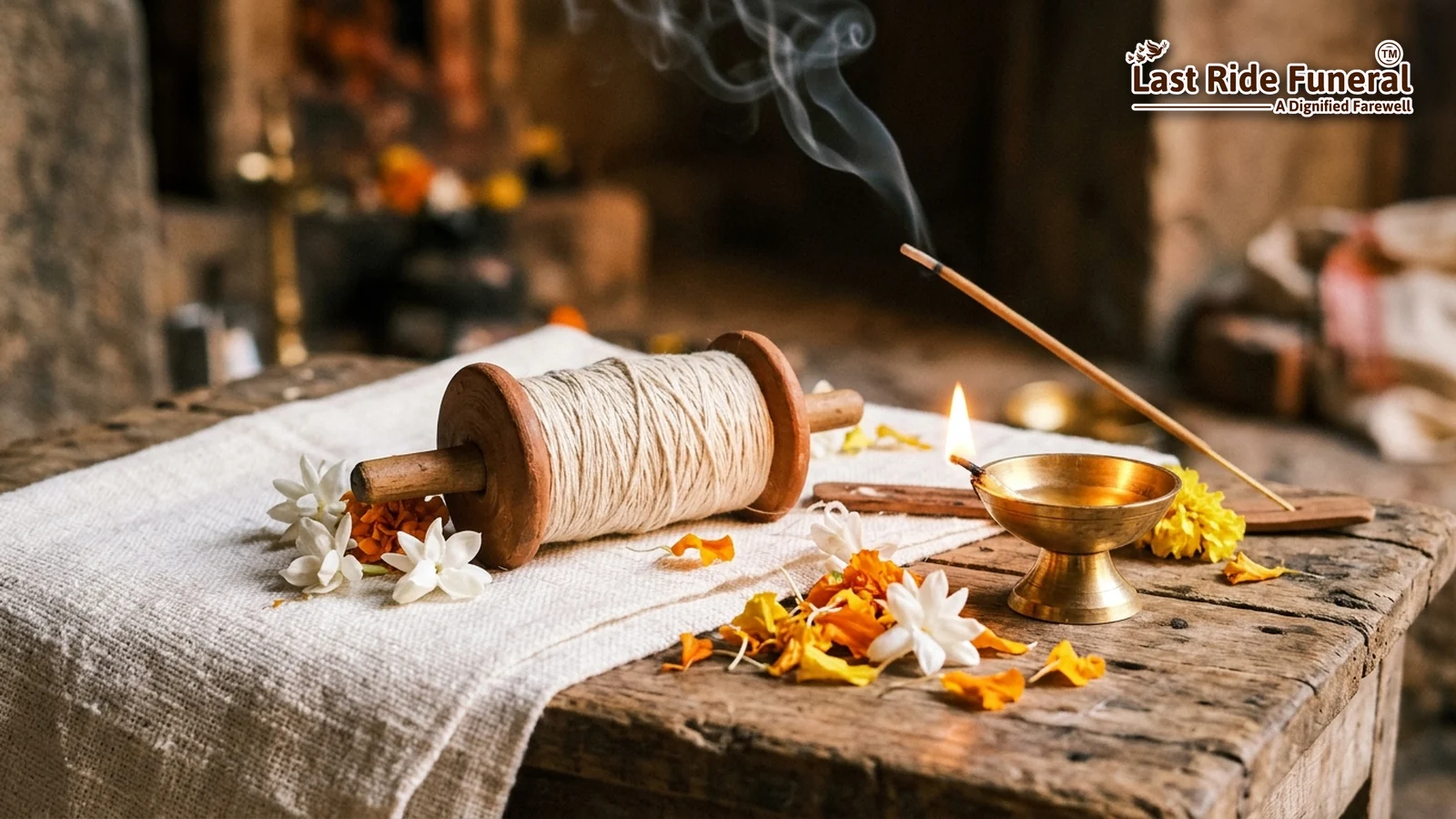
In the solemn, emotionally charged minutes following a person’s final breath in a traditional Hindu household, a quiet sequence of time-honored preparations begins. Before the body is prepared for the sacred final bath (Snana) and long before the funeral pyre is arranged, an elder or designated ritual attendant takes a piece of unbleached, raw white cotton cord (kaccha soot) or sacred kusha grass and carefully binds the two big toes (Angustha) of the deceased together.
To younger generations, onlookers, or grieving family members witnessing this delicate gesture for the first time, the act frequently sparks silent questions: Why are the feet tied so quickly? Does this cause discomfort to the departed soul? Is it an ancient superstition, or is there a deeper metaphysical and scientific principle at work?
Far from being an arbitrary folk custom, the practice of binding the big toes—known historically in Vedic literature as Angustha Bandhana—is a sophisticated synthesis of esoteric yogic energy management and practical anatomical science.
At Last Ride Funeral, our mortuary directors and Vedic ritual coordinators assist bereaved families across Delhi NCR every single day. Here, we break down the profound scriptural teachings from the Garuda Purana, the yogic mechanics of the subtle body (Sukshma Sharira), and the forensic biological realities behind this indispensable post-mortem ritual.
1. The Yogic & Metaphysical Dimension: Sealing the Downward Gates
In Sanatana Dharma, physical biological death (Mrityu) does not signify the instantaneous annihilation of consciousness. Rather, it marks the beginning of an intricate transition wherein the immortal soul (Atman), encased in its subtle energetic vehicle (Sukshma Sharira), gradually disengages from the physical vessel (Annamaya Kosha).
                 ┌──────────────────────────────────────────────┐
                 │    The Two Dimensions of Angustha Bandhana   │
                 └──────────────────────┬───────────────────────┘
                                        │
           ┌────────────────────────────┴────────────────────────────┐
           ▼                                                         ▼
   【 Yogic & Vedic Metaphysics 】                              【 Post-Mortem Forensic Biology 】
   • Seals Apana Vayu downward force                         • Neutralizes early rigor mortis splay
   • Closes lowest subtle energy gates                       • Stabilizes pelvic and thigh symmetry
   • Prevents lower astral infiltration                      • Enables dignified shroud wrapping
   • Directs departing prana upwards                         • Secures anatomical alignment on bier (Arthi)
The Dynamics of Apana Vayu and Prana Release
Vedic yogic texts describe ten vital winds (Vayus) governing human life. While Prana Vayu governs inhalation and the heart space, Apana Vayu is the grounding, downward-moving force seated in the pelvic floor, reproductive organs, and lower extremities, responsible for excretion, downward flow, and earthly attachment.
- Preventing Downward Departure: According to the Garuda Purana, the human body possesses nine anatomical portals (Nava Dvaras): two eyes, two ears, two nostrils, the mouth, the urinary passage, and the anus. Sages taught that if the departing consciousness exits through lower gateways, the soul drifts toward heavier, lower energetic states (Adhogati). Tying the big toes symbolically and energetically locks the lower subtle pathways, encouraging the departing Prana to ascend along the Sushumna Nadi toward the higher chakras (Ajna and Brahmarandhra).
- Severing Lingering Attachment to the Physical Frame: For hours following death, the subtle soul remains hovering near its familiar home, often struggling to accept that its physical life has ended. The sudden binding of the extremities serves as a gentle, unambiguous psychic signal to the subtle spirit that its physical instruments of locomotion and worldly action are permanently sealed.
2. The Garuda Purana Perspective: Protection from Astral Disturbance
The Preta Kanda of the sacred Garuda Purana contains detailed directives regarding the vulnerability of a freshly vacated corpse. Once the conscious life force departs, the physical body is regarded as an empty domicile (Shunya Griha).
“यदा प्राणः परित्यज्य देहं गच्छति तत्क्षणात् । पादौ तु बन्धयेद् विद्वान् सूक्ष्मतत्त्वविशोधनात् ॥”
(The learned attendant should gently bind the feet immediately upon the departure of life, preserving the sanctity of the vacant vessel and shielding it from disordered elements.)
Why the Big Toe in Particular?
In ancient Indian acupressure and Ayurvedic subtle nadi systems, the big toe contains vital energetic terminal points:
– The base of the big toe connects directly to the root chakra (Muladhara) and the termination of the Pingala and Ida nadis.
– Tying the big toes together forms a closed energetic loop, creating a subtle electromagnetic seal across the lower pelvic axis.
– Vedic priests explain that an unbound corpse remains energetically porous, potentially attracting negative astral energies or causing unrest to the departed soul during its initial disembodiment.
3. The Biological & Forensic Science: Rigor Mortis & Dignity
While the scriptural explanations provide profound spiritual peace, the physiological justifications for tying the big toes are equally compelling and scientifically rigorous.
+----------------------------------------------------------------------------------------------------+
|                                TIMELINE OF POST-MORTEM MUSCLE CHANGES                              |
+------------------------------------+-----------------------------------+---------------------------+
| Stage 1: Immediate Flaccidity      | Stage 2: Onset of Rigor Mortis   | Stage 3: Full Fixation    |
| (0 - 2 Hours Post-Death)           | (2 - 6 Hours Post-Death)          | (6 - 12 Hours Post-Death) |
+------------------------------------+-----------------------------------+---------------------------+
| • Total muscular relaxation        | • Chemical ATP depletion in muscle| • Muscles lock completely |
| • Legs splay outwards unnaturally  | • Small muscles (toes, jaw) stiffen| • Distortion is permanent |
| • Ligaments lose all tone          | • Tying now prevents distorted set| • Movement causes tears   |
| • *ACTION: Tie toes immediately*   | • Leg symmetry is preserved locked| • Difficult to place pyre |
+------------------------------------+-----------------------------------+---------------------------+
1. Primary Flaccidity and Outward Splaying
Immediately after death, every muscle in the human body experiences complete flaccidity (Primary Flaccidity). With zero active neurological muscle tone, the weight of the legs and relaxed hip joints causes the feet to rotate sharply outwards, splaying the limbs apart in an awkward, undignified posture.
If left unbound, the legs set in this asymmetrical, open position. Tying the big toes together keeps both feet pointing straight upward, maintaining a respectful, composed, and peaceful appearance.
2. The Irreversible Onset of Rigor Mortis
Within 2 to 4 hours following death (accelerated in Delhi’s intense summer heat), biochemical changes deplete cellular adenosine triphosphate (ATP). Actin and myosin muscle filaments bind irreversibly, causing rigor mortis—the progressive stiffening of all skeletal muscles.
– Once rigor mortis locks the hip, knee, and ankle joints in an open, splayed stance, it is physically impossible to bring the legs together without using traumatic, violent force that could tear stiffened muscle fibers or fracture fragile post-mortem tissues.
– By binding the big toes while the body is still warm and flexible (Placidity window), the mortuary attendants ensure the legs remain locked in perfect, dignified parallel alignment throughout the subsequent hours.
3. Ease of Transportation and Pyre Placement
A body with symmetrically aligned legs is dramatically easier to:
– Bathe gently during the ceremonial Snana ritual.
– Wrap smoothly in the sacred white cotton or saffron silk shroud (Kafan).
– Secure onto the bamboo bier (Arthi) without risk of slipping during the funeral procession.
– Rest gracefully upon the wooden pyre or within modern CNG / Electric Cremation cremation chambers without catching on narrow iron carriage rails.
4. Rigor Mortis Management vs. Vedic Tradition: Side-by-Side Comparison
| Parameter | Vedic / Garuda Purana Doctrine | Modern Forensic & Biological Science |
|---|---|---|
| Primary Action | Tying the big toes with kaccha soot (raw cotton cord). | Mechanical adduction of lower extremities before ATP depletion. |
| Primary Purpose | Sealing the downward Apana Vayu and Muladhara gateways. | Neutralizing outward hip rotation caused by complete muscle flaccidity. |
| Energetic Effect | Creates an unbroken subtle circuit, preventing lower energy loss. | Keeps the corpse compact, structurally stable, and anatomically aligned. |
| Timing Requirement | Must be performed immediately following the cessation of breath. | Must be executed within 60–90 minutes before rigor mortis sets. |
| Shroud Compatibility | Ensures the white cloth (Kafan) wraps symmetrically without gaping. | Avoids excessive fabric stretching and tearing during body transit. |
| Pyre Alignment | Aligns the body toward the auspicious North-South cremation axis. | Prevents limbs from hanging over the edges of narrow cremation biers. |
5. Critical Vedic Rule: Why the Toes MUST Be Untied Before Cremation
While tying the toes is mandatory in the minutes following death, leaving the toes tied on the funeral pyre is strictly forbidden in orthodox Hindu ritual practice (Antyesti Vidhi).
Before the chief mourner (Karta) performs the final circumambulations around the pyre, circumscribing the body with sacred fire and water, the attending priest (Pandit Ji) or family elder must cut or untie the cotton thread:
  Step 1: Immediate Passing ──► Tie big toes with white cotton thread (Angustha Bandhana)
  Step 2: Home Vigil & Bath ──► Keep feet tied during Darshan, Vastra Daan, and Arthi preparation
  Step 3: Transfer to Ghat  ──► Body transported to cremation ground securely bound
  Step 4: Pyre Placement    ──► Untie / Cut the cord completely BEFORE lighting the sacred fire (Mukhagni)
The Three Sacred Reasons for Untying the Cord:
- Total Release of Earthly Bonds: The physical body was bound only to preserve earthly dignity during transit. At the moment of Dahana Sanskar (cremation), the soul must be liberated completely from every worldly fetter, knot, and rope. Leaving a knot intact is believed to psychologically tether the departing spirit to its earthly container.
- Pancha Bhoota Dissolution: The purpose of the cremation fire is to return the five elements (Pancha Bhoota—Earth, Water, Fire, Air, Space) back to the cosmos. A tied knot restricts the free expansion and disintegration of matter within the flames.
- Preventing Physical Restriction During Heat Contraction: As the extreme heat of the cremation fire acts upon skeletal muscle proteins, muscle tissues contract naturally. If the legs remain tied together with tight cord, unnatural mechanical tension builds across the lower extremities, disrupting the peaceful, uniform combustion of the pyre.
6. How Families Should Handle This at Home
If a loved one passes away at home in Delhi NCR, families often find themselves overwhelmed with grief and uncertain about the immediate practical steps. Here is the recommended, respectful protocol:
- Verify Passing: Ensure death is confirmed by a registered medical practitioner and obtain the official Death Certificate (Form 4 or Form 4A).
- Position the Body Gracefully: Lay the deceased gently on a clean white sheet on the floor, ideally oriented with the head pointing North or East.
- Straighten the Limbs: Gently align the arms along the sides of the torso and bring the legs straight together before the body cools.
- Tie the Toes: Use a simple piece of raw white cotton cord (kaccha soot) or soft cotton bandage to tie the two big toes together with a loose, easily untied slipknot. Never use tight synthetic cords, plastic zip-ties, or metal wire.
- Close the Eyes and Jaw: Gently lower the eyelids and, if the jaw tends to drop, support it with a soft white cloth tied under the chin and knotted over the crown of the head.
- Arrange Mortuary Care: If relatives are traveling from out of town or abroad, arrange an air-conditioned Dead Body Ambulance or Mobile Mortuary Freezer Box to preserve the body in a pristine, dignified condition until the cremation ground rites commence.
More From Last Ride Funeral
7. Frequently Asked Questions (FAQs)
Why are the big toes of a dead body tied together in Hinduism?
In Hinduism, the big toes are tied together with raw white cotton thread immediately after death for both spiritual and physiological reasons. Spiritually, it seals the lowest energy channels (Apana Vayu and Muladhara), preventing negative energies from entering the vacant vessel and directing the soul’s subtle energy upwards. Biologically, it prevents the legs from splaying outward due to post-mortem muscle flaccidity, ensuring symmetrical, dignified alignment before rigor mortis sets in.
What thread or material should be used to tie the big toes?
Vedic tradition specifies using raw, unbleached white cotton thread (kaccha soot), pure cotton bandage cloth, or sacred kusha grass. Synthetic materials like nylon, plastic, or wires should never be used, as the material must be pure, non-toxic, and easily cut or untied prior to the funeral pyre rites.
Does tying the toes cause pain or distress to the departed soul?
No. Once the physical breath and heart cease, sensory nerve transmission ends completely. Spiritually, Vedic texts teach that binding the toes actually provides comfort and reassurance to the departing soul by containing disorganized subtle vibrations and signaling that the earthly vehicle is being respectfully cared for by loving family members.
When should the thread tying the toes be removed?
The thread must strictly be untied or cut at the cremation ground immediately before the funeral pyre is lit (Mukhagni). Hindu scriptures forbid burning the body with any knots or bindings intact, ensuring the soul is completely freed from all earthly bonds and allowing the elements to dissolve freely into the fire.
What happens if the family forgets to tie the big toes after death?
If the toes are not tied within the first 1 to 2 hours, primary flaccidity causes the legs to roll outward, and rigor mortis will eventually lock the limbs in an asymmetrical, splayed position. While this does not harm the soul’s ultimate spiritual journey, it makes subsequent bathing, shroud wrapping, and pyre placement substantially more difficult and less dignified.
Why is the jaw also tied along with the toes in Hindu funerals?
Just as the hip muscles relax and cause the legs to splay, the masseter and facial muscles relax after death, causing the lower jaw to drop open. A soft cloth is tied under the chin and secured at the crown of the head to keep the mouth closed, preserving a serene, peaceful facial expression and preventing insect entry or oral drying before cremation.
Is this ritual performed for both men and women across all Hindu communities?
Yes. The practice of Angustha Bandhana is universally observed across Brahmin, Kshatriya, Vaishya, and other Sanatana Dharma communities across North and South India. It applies equally to deceased men and women as a foundational step of Shava Samskara (pre-funeral mortuary care).
How does Last Ride Funeral assist families with these immediate rituals in Delhi NCR?
Last Ride Funeral provides 24/7 compassionate mortuary assistance across Delhi, Gurgaon, Noida, and Faridabad. Our experienced funeral coordinators arrive promptly with complete Antim Sanskar Samagri kits (including sacred cotton soot, Gangajal, Tulsi, and shrouds), assist with respectful bodily positioning, provide mobile freezer boxes, and manage seamless crematorium bookings. Call our 24/7 helpline at 9217179989 for immediate assistance.
Conclusion: Ancient Wisdom Preserving Eternal Dignity
The sacred tradition of tying the big toes together after death stands as a testament to the holistic depth of Vedic civilization. Long before modern forensic textbooks cataloged the phases of primary flaccidity, ATP depletion, and rigor mortis, ancient Indian sages understood how the human form behaves in death—and how to honor it with meticulous reverence.
By combining the subtle spiritual protection of the Garuda Purana with the practical preservation of bodily dignity, Angustha Bandhana ensures that our elders and loved ones depart this earthly plane in peaceful, serene majesty.
For 24/7 compassionate funeral assistance, home preparation guidance, hearse transport, and crematorium slot arrangements across Delhi NCR, reach out to the dedicated team at Last Ride Funeral.
- 24/7 Funeral Helpline: 9217179989
- Official Website: https://lastridefuneral.in/
- Immediate Response: Under 30 minutes across Delhi, Gurgaon, Noida, and surrounding NCR districts.